
Fajar Rehman
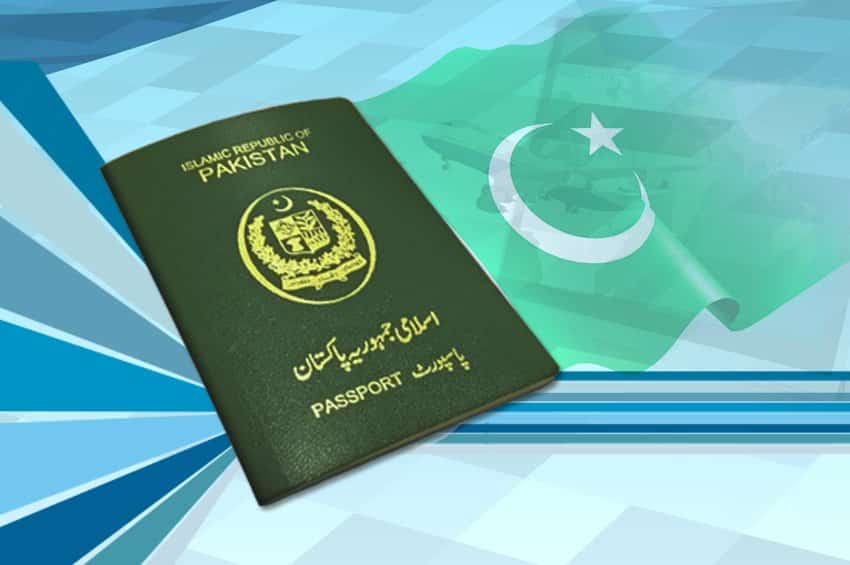
Pakistan’s announcement that it will phase out machine-readable passports in favour of fully biometric e-passports marks one of the more sensible administrative decisions to come out of Islamabad in recent years. Interior Minister Mohsin Naqvi unveiled the move with the promise of tighter security against document forgery and faster processing through automated e-gates at international airports. On both counts, the reform is welcome. It is also, frankly, overdue. Countries across the region moved to biometric travel documents years ago, and Pakistan’s citizens have waited far too long for a system that matches international standards. But here is the uncomfortable truth that no press conference will volunteer: upgrading the passport’s technology does not automatically upgrade what that passport allows its holder to do.
This distinction matters more than officials seem willing to admit. There is a persistent confusion in public discourse between passport security and passport strength, and the two are not the same thing at all. Security refers to the physical and digital integrity of the document itself — how hard it is to forge, alter, or clone. Strength, on the other hand, refers to something entirely different: how much trust foreign governments place in the country that issued the passport, and by extension, in the people travelling on it. A chip embedded with biometric data can make a passport nearly impossible to counterfeit. It cannot, however, persuade a visa officer in London, Brussels, or Ottawa that the bearer poses no risk of overstaying, working illegally, or disappearing into an asylum system. Those concerns sit far outside the realm of document engineering. They belong to the world of diplomacy, governance, and law enforcement credibility — territory that no chip, however advanced, can touch.
This is precisely why Pakistan’s passport continues to languish near the bottom of global rankings, currently sitting at 100th place worldwide, even as the government rolls out new technology. The ranking reflects something deeper than document quality. It reflects decades of accumulated mistrust built on documented instances of visa overstays, asylum claims that countries view as economically rather than persecution-driven, identity fraud cases, and border management systems that have struggled to project reliability. No biometric upgrade reverses that perception overnight. Foreign governments do not relax visa requirements because a passport has a shinier chip. They relax them when they have evidence, accumulated over years, that the issuing country’s institutions can be trusted to manage migration responsibly and that its citizens largely comply with the terms of the visas they are granted.
This is the pattern history shows again and again. Nations that have climbed the passport strength rankings did not do so primarily through technological upgrades. They did so by demonstrating, consistently and over extended periods, that their border controls were effective, that their citizens honoured visa conditions, and that their governments were reliable diplomatic partners. Trust of this kind is not manufactured in a single budget cycle. It is earned incrementally, through sustained institutional performance and patient diplomatic engagement, and it can be lost far more quickly than it is built.
Successive Pakistani governments have, unfortunately, tended to treat passport reform as an end in itself rather than as one piece of a much larger puzzle. Each new initiative — whether it was the original machine-readable passport rollout decades ago or today’s biometric upgrade — has been presented with considerable fanfare as evidence of progress, while the harder, less photogenic work of rebuilding international confidence in Pakistan’s governance and border management has received comparatively little sustained attention. The result is a familiar cycle: incremental technical improvements celebrated as breakthroughs, followed by continued frustration among ordinary Pakistanis who find that their new, more secure passport still does not open the doors they had hoped it would.
None of this should diminish the genuine value of what the Interior Ministry has announced. A fully digitised, biometric passport system carries real and tangible benefits that deserve acknowledgment rather than dismissal. Reduced opportunities for document forgery mean fewer avenues for the kind of corruption that has long plagued passport offices, where bribery and manipulation have sometimes substituted for proper verification. Faster e-gate processing will save millions of Pakistani travellers, both at home and in the diaspora, countless hours at airports that have too often been associated with delay, confusion, and bureaucratic friction. If the rollout is executed competently and the new infrastructure is properly maintained, it could meaningfully restore public confidence in an institution that has, for years, struggled to deliver basic services efficiently.
But efficiency at home is not the same as credibility abroad, and Pakistan’s policymakers must resist the temptation to conflate the two. The e-passport should be understood as exactly what it is: one useful component within a far broader strategy that must also include stronger border management, more rigorous enforcement against visa violations, deeper and more consistent diplomatic engagement, and a demonstrated commitment to the kind of institutional governance that foreign capitals actually look for when deciding how much trust to extend. Technology can polish the instrument. It cannot, by itself, rewrite the reputation behind it. That work remains undone, and no chip will do it for Pakistan.
The best-selling books of Republic Policy Think Tank, including the landmark book The Bureaucratic Coup, are available at Vanguard Books, Liberty Books, Readings, Kitab Sarai, Sang-e-Meel, Saeed Book Stores, and others across Pakistan. Contact for home delivery: 0300 9552542.