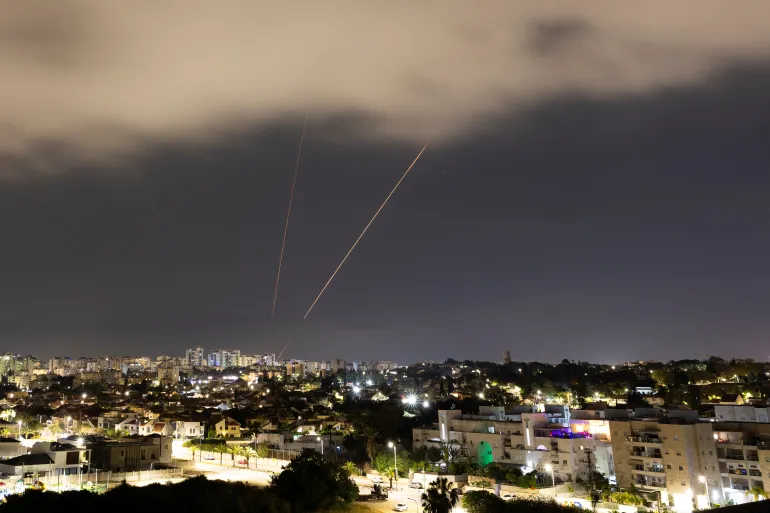

Several US military aircraft were damaged during Iranian strikes on Muwaffaq Salti Air Base in Jordan, according to a CBS News report citing people familiar with the situation.
Around eight F-15 fighter jets sustained minor damage in the overnight attacks from Tuesday into Wednesday, but were later returned to service. An A-10 Thunderbolt, commonly known as the Warthog, was also reportedly struck and lost a wing. No US fatalities were reported in Jordan.
The attacks followed Washington’s announcement that US forces had struck five Iranian tankers in retaliation for an Iranian attack on a US Navy vessel. Iran’s Islamic Revolutionary Guard Corps later said it had targeted eight tankers, two warships and the US military base in Jordan.
US forces reportedly fired more than 30 Patriot missiles to defend the Jordanian base. The scale of the defensive response comes amid concerns among US officials over declining stocks of Patriot missiles and other precision-guided munitions.
The latest exchange is part of a broader escalation between Washington and Tehran that has increasingly affected military installations and vital shipping routes across the Middle East.
Speaking at a Republican midterm convention in Dallas, President Donald Trump claimed the United States was winning the war and said Washington now controlled the Strait of Hormuz. He suggested that the strategic waterway should be renamed the “Trump Strait”.
Trump also warned Iran against further activity at Pickaxe Mountain, a heavily fortified site near the damaged Natanz uranium enrichment facility. He said the United States was monitoring activity there and threatened further military action if necessary. Iran maintains that its nuclear programme is intended for peaceful purposes.
The remarks came despite a memorandum signed in June that envisaged reopening the Strait of Hormuz as a step towards a wider peace agreement.
Shipping through the strategic waterway remains severely disrupted. Preliminary tracking data showed that only seven vessels passed through the Strait of Hormuz on Wednesday, down from 12 a day earlier and well below the 10-day average of 14. Four vessels exited the strait while three entered, although ships travelling with their transponders switched off would not be reflected in the figures.
Trump also said he expected the conflict with Iran to end after the November US midterm elections, accusing Tehran of attempting to influence the vote. He argued that Iran could not sustain the conflict much longer, although he has previously set deadlines for an end to the war.
The Wall Street Journal reported that senior administration officials, including Vice President JD Vance and Secretary of State Marco Rubio, had privately warned Trump that the conflict could continue for much longer, potentially through the remainder of his presidency. Reuters said it could not independently verify that report.
The US and Israel launched military strikes against Iran in February amid concerns over Tehran’s nuclear programme. Six months later, the conflict has expanded into repeated attacks on shipping and regional military targets, while efforts to restore normal traffic through the Strait of Hormuz have suffered setbacks.
Iran said it attacked 10 ships near the strait on Wednesday after the United States sank five Iranian oil tankers. The renewed escalation has further disrupted one of the world’s most important energy routes, which carried about one-fifth of global oil supplies before the war.
Tensions have also intensified around the Red Sea. Saudi authorities issued repeated emergency alerts in Khamis Mushait as fighting with Yemen’s Iran-backed Houthis escalated. According to the Saudi-led coalition, at least 73 people were wounded in recent Houthi attacks across four southern Saudi cities.
The Houthis said they had targeted an air base in Khamis Mushait as well as oil infrastructure in nearby areas, opening another front of instability threatening Middle Eastern energy supplies.
The regional disruption has kept Brent crude prices above $100 a barrel as traffic through both the Strait of Hormuz and the Red Sea remains constrained. The war and resulting rise in fuel prices have also become an increasingly important domestic political issue for Trump ahead of the November midterm elections.