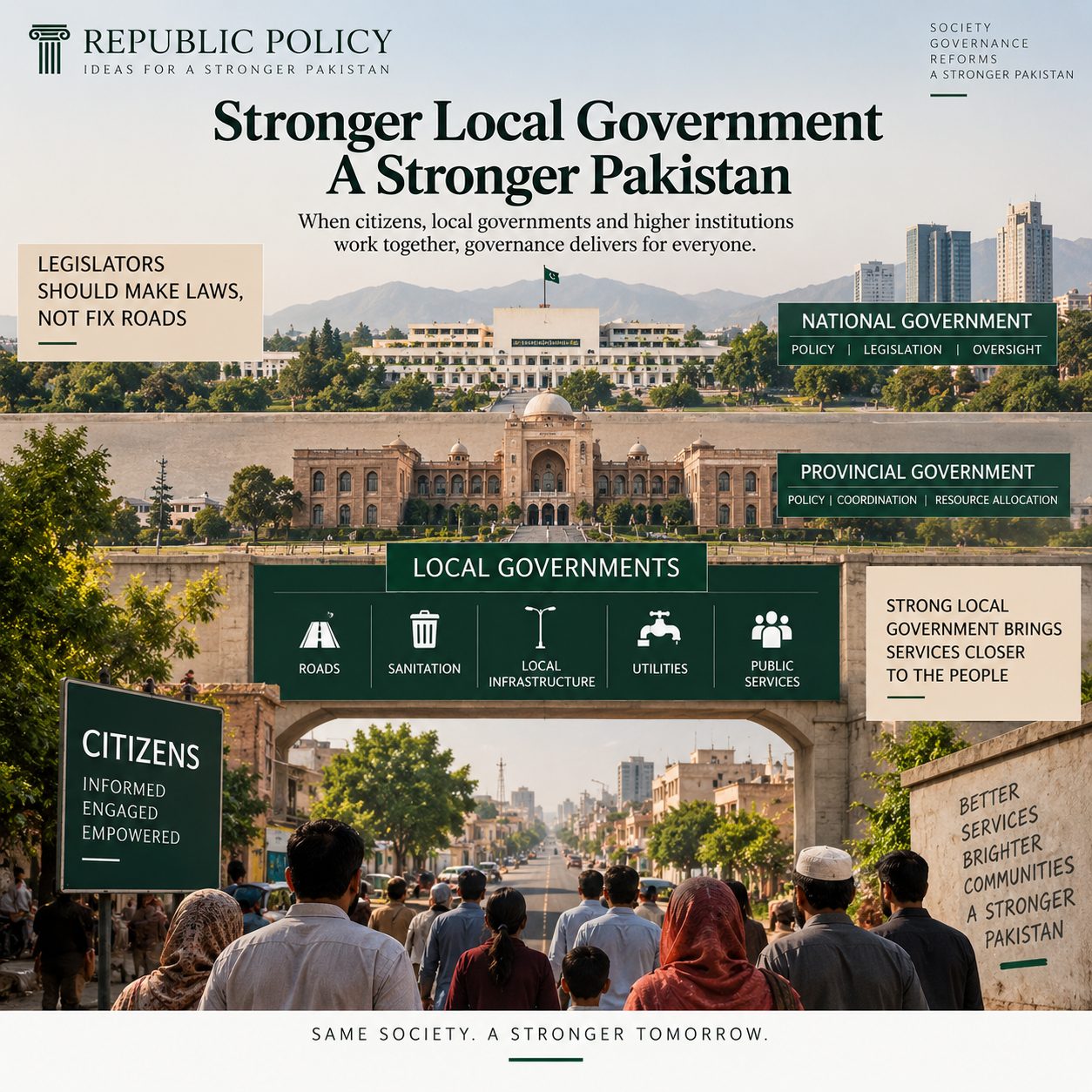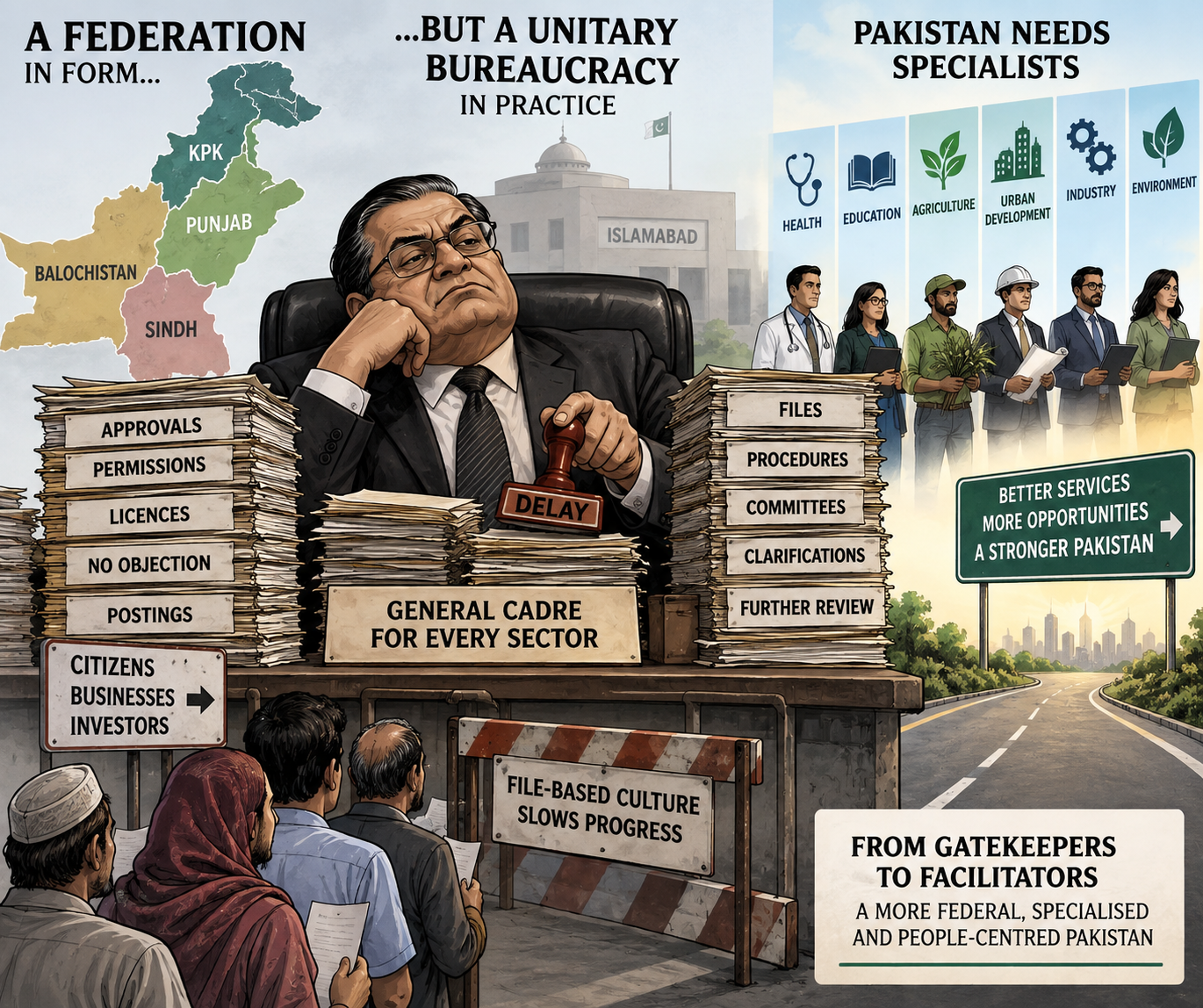

Pakistan is constitutionally a federation, yet much of its administrative system still operates with a unitary mindset. Powers may be divided between the federation and provinces, but the bureaucracy has not evolved accordingly. Genuine federalism requires not only political autonomy but also administrative federalism.
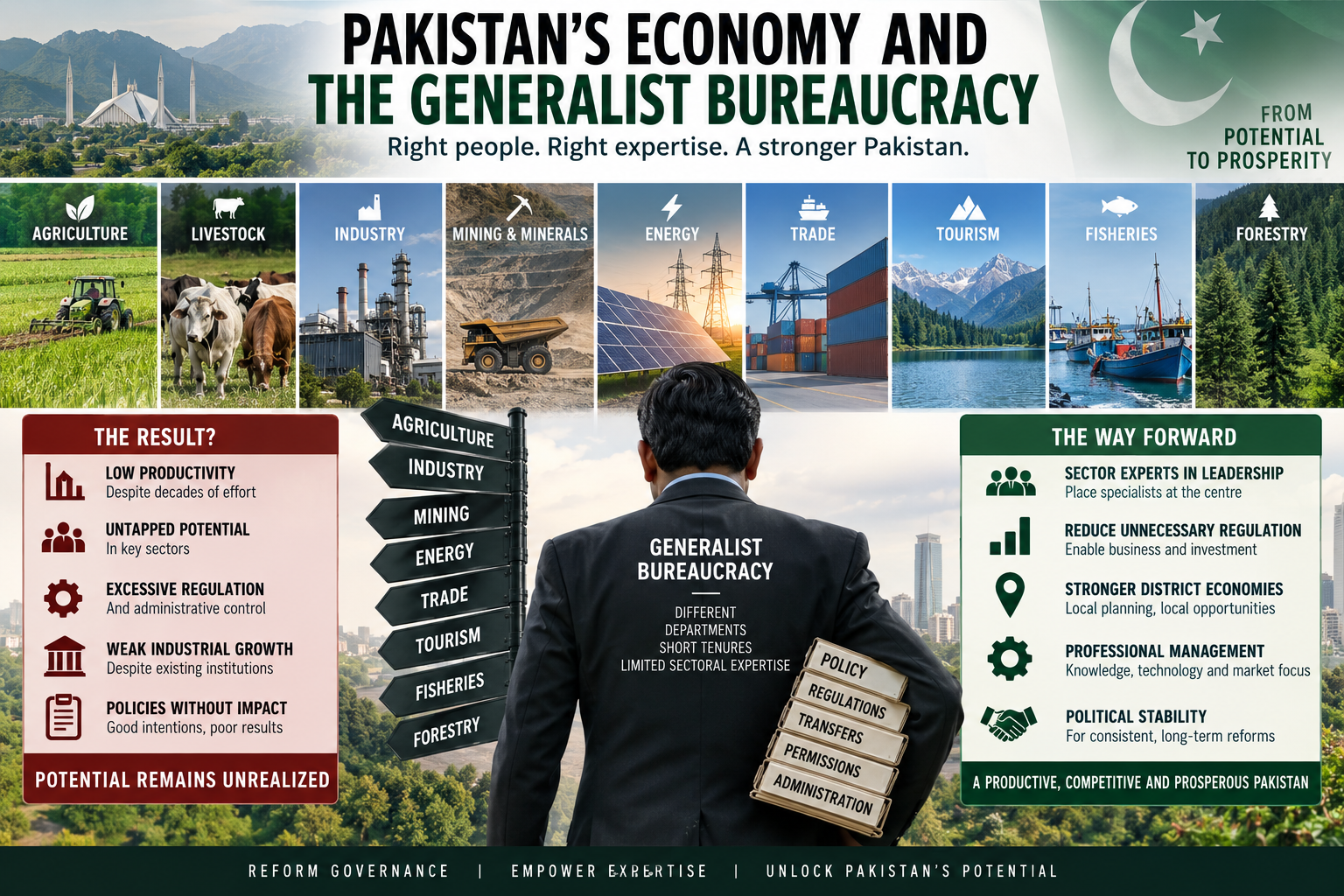
The second problem is Pakistan’s dependence on generalist cadres. Modern governance is increasingly specialised. Health, education, agriculture, urban development, industries and minerals require professional administrators with relevant expertise. Generalists may coordinate government, but they cannot substitute for specialists in every sector.
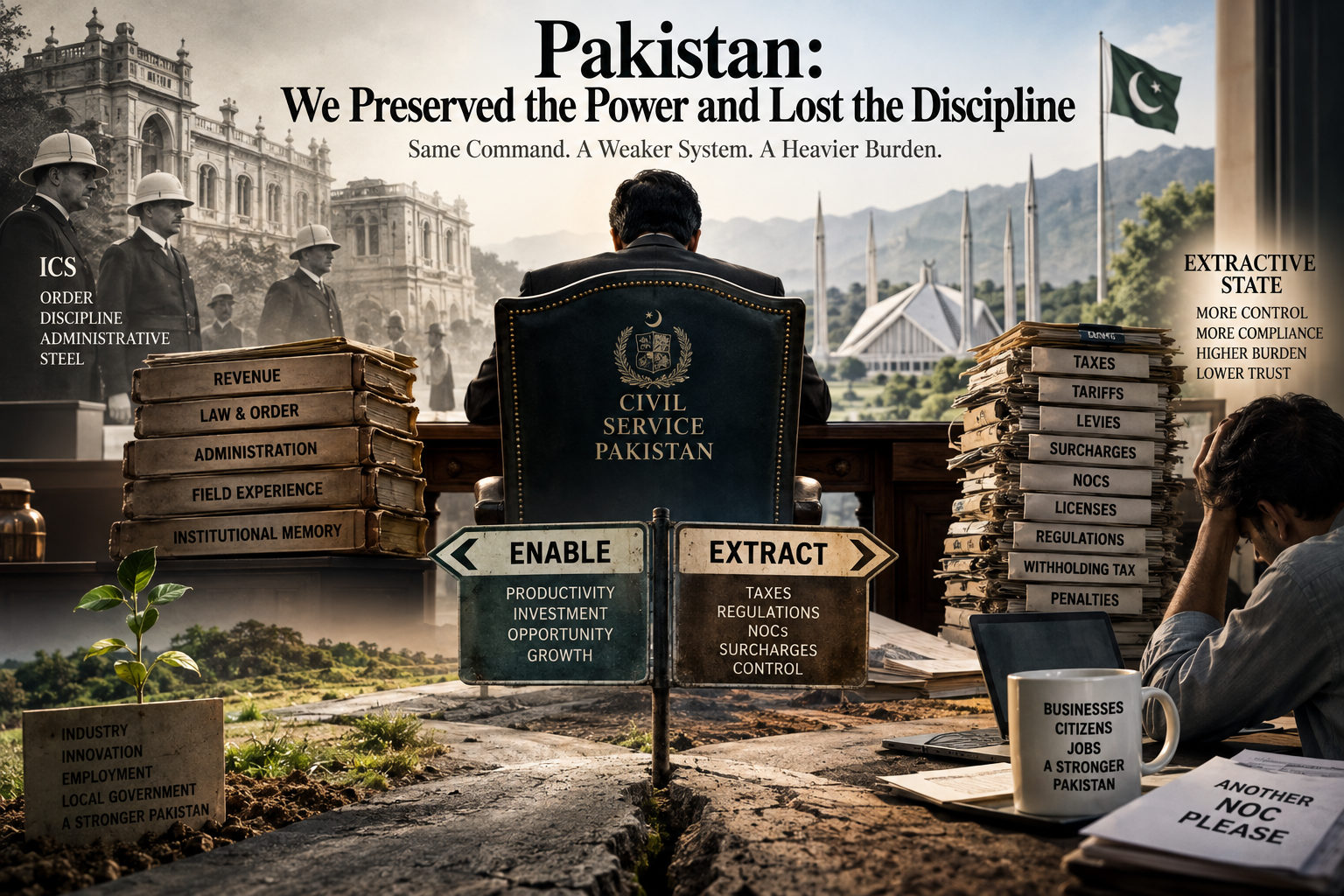
More importantly, bureaucracy often functions as a gatekeeper rather than a facilitator. Its power comes from controlling files, approvals, licences, postings and permissions. This file-based culture rewards procedural control instead of outcomes, slowing investment, development and public service delivery.
Pakistan does not need to weaken bureaucracy; it needs to modernise it. The country must move from general cadres to specialised administration, from centralised control to administrative federalism, and from file manipulation to measurable performance.
A federation needs federal administration, a modern state needs specialists, and a developing economy needs facilitators—not gatekeepers.