
Editorial
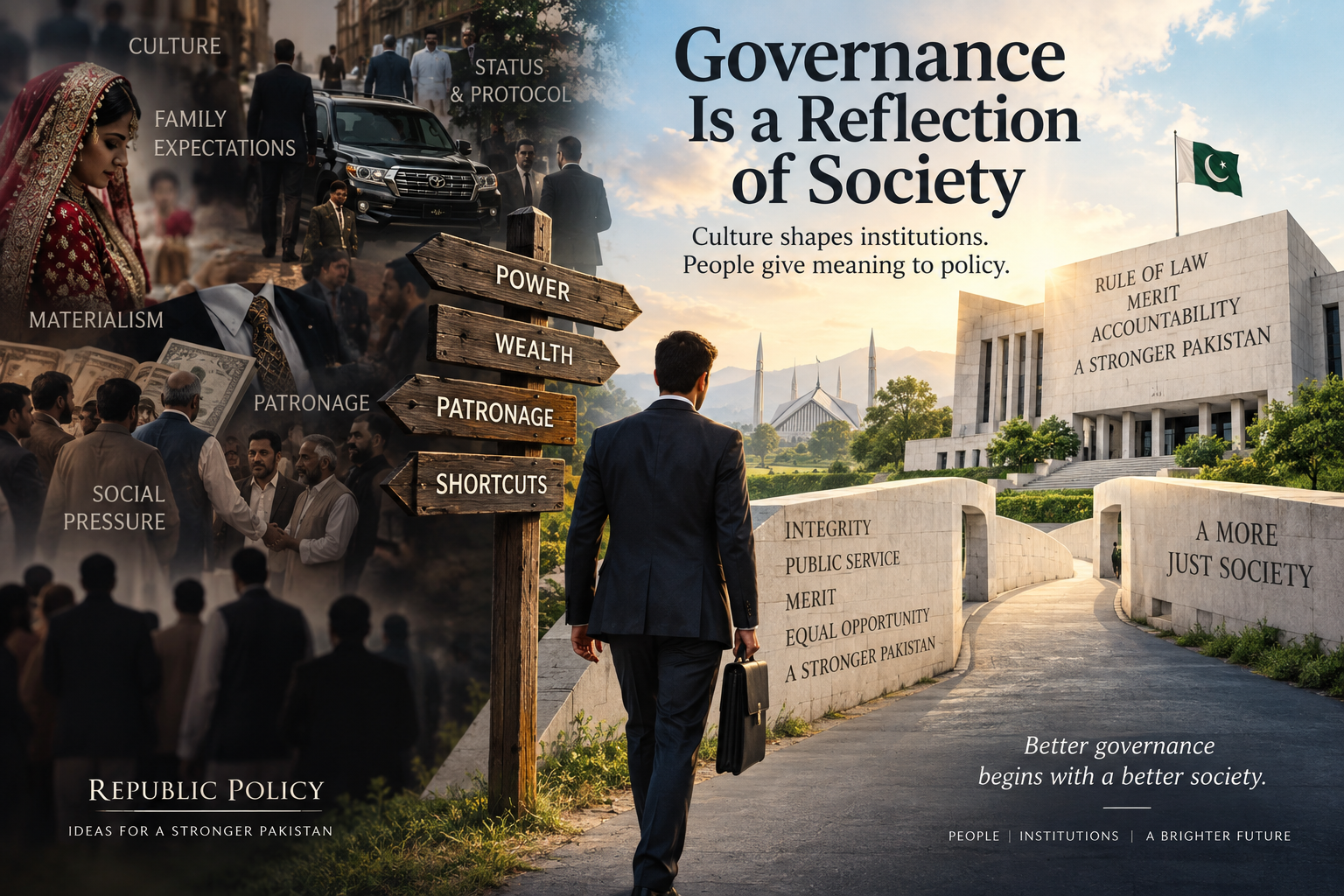
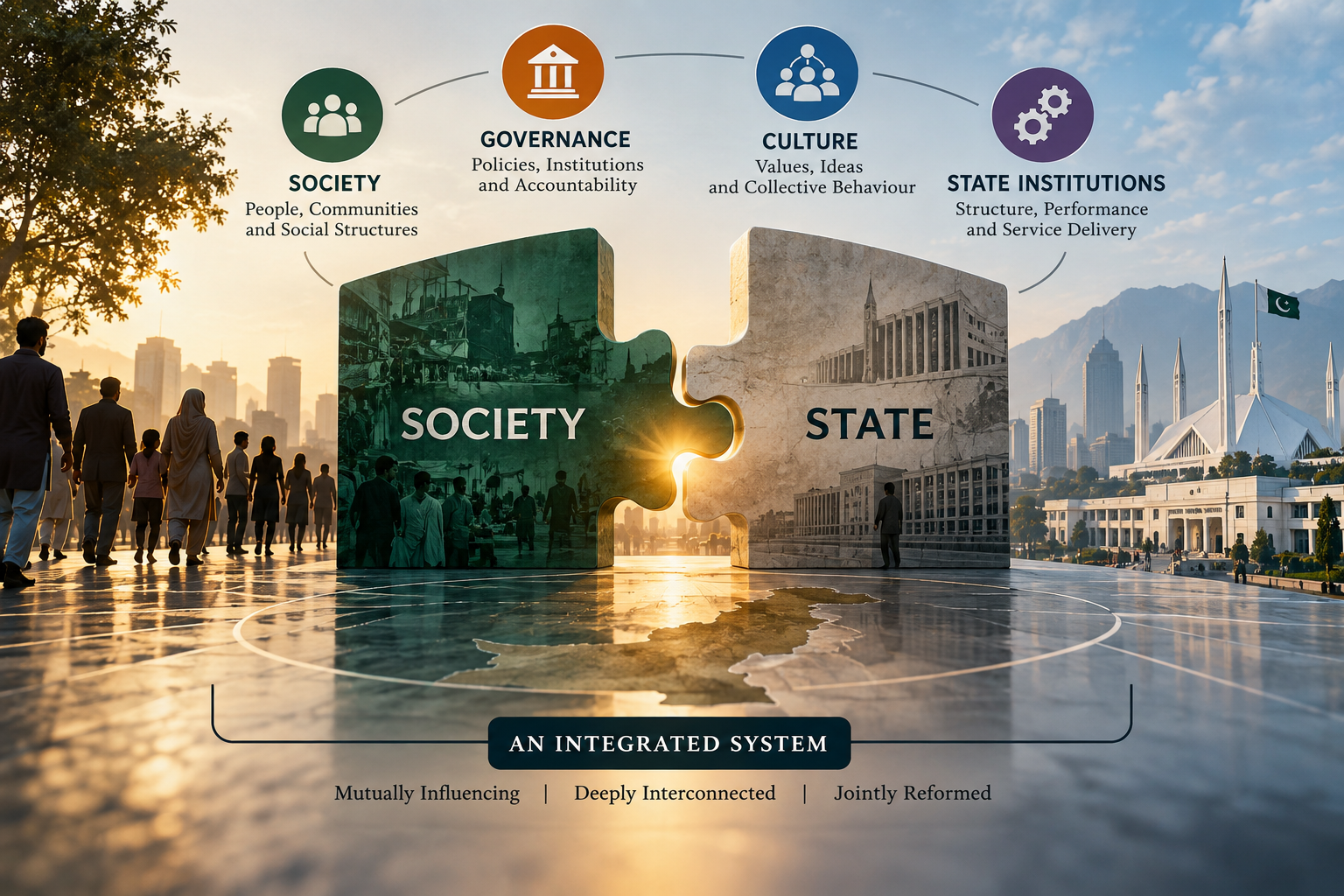
A state does not exist in isolation from its society, nor can a society be understood independently of the institutions that govern it. The relationship between the two is continuous, reciprocal and deeply structural. Any serious programme of reform must begin by recognising this interdependence.
At Republic Policy, we approach governance, culture, social organisation and state institutions as interconnected dimensions of a single system. Each shapes the others. The effectiveness of public institutions is influenced by the society in which they operate, just as social attitudes, collective behaviour and cultural practices are affected by the quality of governance.
This understanding challenges the tendency to treat reform as a narrowly administrative exercise. Reorganising a department, revising a procedure or changing an institutional hierarchy may address a particular problem, but such measures cannot, by themselves, transform the wider system. Lasting reform requires attention to the relationships through which institutions and society influence one another.
Governance must therefore be examined alongside culture. Institutional performance must be understood in relation to social structures. The organisation of the state must be considered together with the character and functioning of the society it serves.
Republic Policy’s vision is consequently neither confined to the state nor detached from it. We seek an integrated approach to restructuring in which institutional, administrative, cultural and social dimensions are addressed as parts of a coherent whole.
The central question is not simply how an individual institution can be improved. It is how the broader relationship between the state and society can be reorganised to produce a more coherent and effective system.
Reform, in this understanding, is not the repair of isolated institutions. It is the comprehensive restructuring of the interconnected system through which a state and its society function.