
Editorial
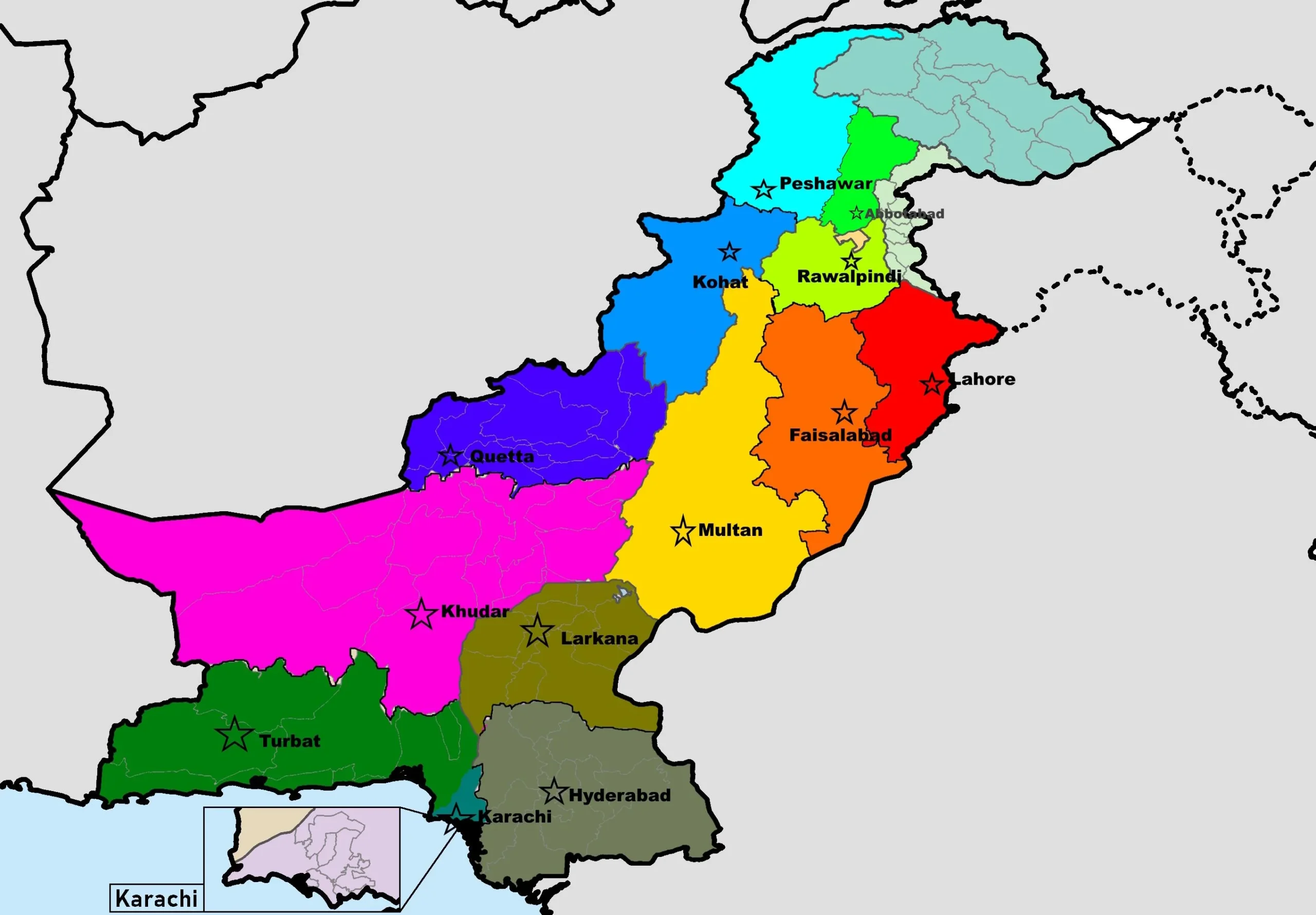
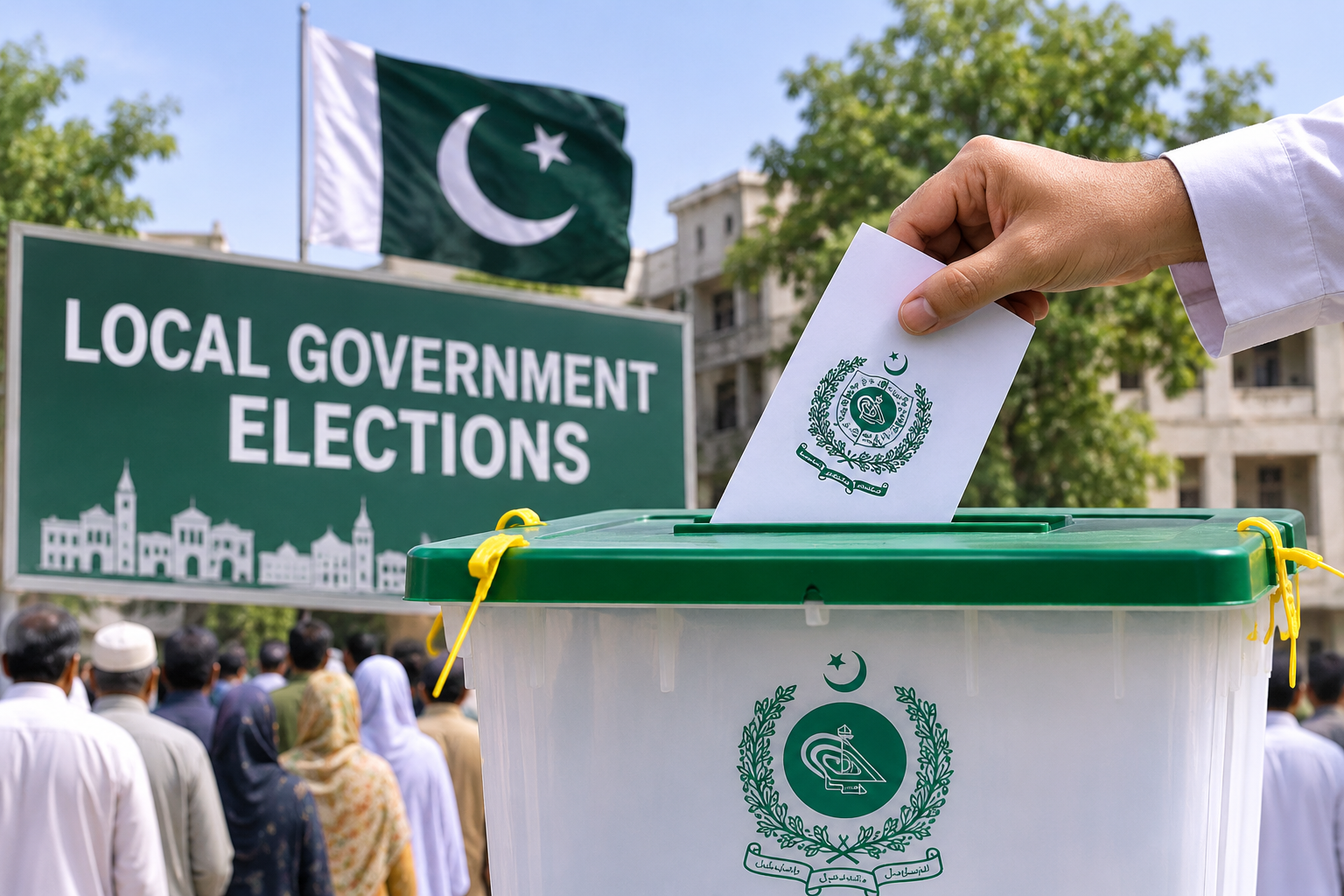
Pakistan’s struggle to establish effective local governments has suffered another setback. Two significant developments reported on November 5 have raised serious concerns about the future of grassroots democracy, particularly in provinces where elected local governments are either absent or have yet to be restored. One concerns Khyber Pakhtunkhwa, where a federal notification has reportedly declared Article 140-A of the Constitution inapplicable across the province. The other concerns Punjab, where the Election Commission has accepted a request for further time to conduct local government elections, pushing the proposed electoral process towards February 7.
Although these developments differ in their legal and administrative nature, they point towards a common problem: the persistent reluctance of provincial and federal authorities to establish local governments as a functioning and permanent tier of democratic governance.
Article 140-A: A Constitutional Guarantee or a Conditional Provision?
The development in Khyber Pakhtunkhwa raises perhaps the most serious constitutional question. According to the information that has emerged, the federal government has issued a notification declaring that Article 140-A will no longer be applicable in the province. Earlier, the reported exemption was limited to twelve districts. The latest development appears to extend this position to the entire province.
Article 140-A is not an ordinary administrative provision. It is a constitutional requirement that directs every province to establish local governments and devolve political, administrative and financial responsibility and authority to elected local representatives. It also requires that local government elections be held by the Election Commission of Pakistan.
The purpose of this constitutional arrangement is clear: democracy cannot remain confined to the national and provincial levels. Citizens must also have elected institutions at the local level through which they can exercise political authority, influence public decisions and hold local administrators accountable.
If the reported notification effectively suspends the application of Article 140-A throughout Khyber Pakhtunkhwa, it raises fundamental questions about the constitutional authority of the federal government. Can a constitutional provision be declared inapplicable in a province through an executive notification? What constitutional or statutory authority supports such a decision? Can an administrative instrument override an obligation imposed directly by the Constitution?
These questions require careful legal examination. A constitutional provision cannot ordinarily be set aside through an executive notification. Any attempt to restrict its operation must be tested against the constitutional framework, the relevant legislation and the distribution of powers between the federation and the provinces.
It is also important to distinguish between the legal status of Article 140-A and the practical arrangements for holding local government elections. Administrative difficulties, security considerations or other exceptional circumstances may require adjustments to an electoral schedule. However, such considerations cannot automatically be treated as grounds for eliminating a constitutional obligation altogether.
The matter may ultimately require judicial interpretation. If the notification is challenged, the courts will have to examine whether the executive has acted within its constitutional authority and whether the stated grounds can legally justify the position adopted by the government. Until its legal basis is established, the notification should be treated as a serious constitutional question rather than an unquestionable determination.
Punjab: Another Delay in the Restoration of Local Democracy
The second development concerns Punjab, where the process of holding local government elections has once again encountered delays.
During the November 5 hearing before the Election Commission of Pakistan, the Chief Secretary Punjab reportedly informed the Commission that the provincial administration would not be able to conduct elections within the next two months and required at least two additional months to make the necessary arrangements.
The Election Commission accepted the request and indicated that the first phase of local government elections in Punjab would begin on February 7, with the electoral process expected to proceed in three phases.
On paper, this may appear to be a revised electoral schedule. In practice, however, it reflects a familiar pattern in Pakistan’s local government history: elections are delayed, administrative preparations remain incomplete, new timelines are announced, and the possibility of further postponement continues to hang over the process.
The central question is no longer simply when Punjab will hold its local government elections. It is why the provincial administration repeatedly struggles to organise an electoral process that is constitutionally necessary and fundamental to democratic governance.
A delay of two months may be administratively justified if genuine logistical requirements exist. However, the government must explain those requirements transparently and demonstrate that the additional time will actually be used to complete preparations. Otherwise, every extension risks becoming another instrument for postponing the restoration of elected local institutions.
The Election Commission must also ensure that its constitutional responsibility is not reduced to repeatedly accommodating administrative requests. Its role is not merely to announce election dates but to protect the integrity and continuity of the electoral process.
The Larger Crisis of Local Government in Pakistan
Taken together, the developments in Khyber Pakhtunkhwa and Punjab reveal a deeper structural weakness in Pakistan’s democratic system. Political parties frequently speak about democracy, constitutionalism and public participation, yet local governments remain among the most neglected institutions of the state.
The problem is rooted in the concentration of political, administrative and financial authority at the provincial level. Provincial governments often regard empowered local governments as competing centres of authority rather than as essential institutions of democratic governance. Elected local representatives, if granted meaningful powers, can influence development priorities, control local resources and become directly accountable to citizens. This necessarily changes the existing distribution of political power.
Consequently, local governments are often established under provincial legislation but denied the autonomy required to function effectively. Their powers can be restricted, their financial resources controlled and their institutional existence made dependent on the preferences of provincial governments.
This arrangement contradicts the spirit of Article 140-A. The constitutional promise is not simply to create local councils or conduct periodic elections. It is to devolve meaningful political, administrative and financial authority to elected local institutions.
Pakistan cannot achieve effective democratic governance while treating local government as an optional administrative arrangement. Public service delivery, urban management, municipal planning, local infrastructure, sanitation and community-level development all require institutions that are close to citizens and responsive to their needs.
A functional local government system would also reduce the excessive burden placed on provincial governments. Instead of centralising every development decision within provincial departments and political offices, authority could be distributed to institutions with a better understanding of local needs and priorities.
February 7: A Date or Another Political Promise?
Punjab’s announced electoral timeline must now be treated as a test of institutional commitment. February 7 should not become another provisional date followed by fresh administrative explanations and further extensions. The provincial government must complete its preparations, while the Election Commission must ensure that the process proceeds according to the announced schedule.
Similarly, the reported notification concerning Article 140-A in Khyber Pakhtunkhwa requires immediate constitutional and legal scrutiny. The federation and the provinces cannot be allowed to treat constitutional obligations as matters that can be suspended through administrative convenience.
Ultimately, Pakistan needs a clear political consensus that local governments are not subordinate political experiments but an indispensable tier of the constitutional democratic structure. Their continuity should not depend on the changing preferences of provincial administrations.
Democracy is meaningful only when citizens can exercise political authority beyond periodic national and provincial elections. Without empowered local governments, democratic participation remains distant, public accountability remains weak, and the state continues to operate through excessive centralisation.
The challenge, therefore, is not merely to hold local government elections in Punjab or clarify the legal position in Khyber Pakhtunkhwa. It is to establish a durable system in which local democracy is constitutionally protected, financially viable, administratively autonomous and politically accountable.
Pakistan cannot claim to be a fully functioning democracy while keeping democracy away from the people at the very level where they experience the state most directly.