
John Mearsheimer
The US decision to attack Iran on February 28, 2026, exposed the dangers of pursuing regime change through military force without a credible political strategy. Washington underestimated Iran’s resilience, confused military destruction with political victory, and entered a conflict whose objectives proved far more difficult to achieve than its planners appeared to anticipate.
States generally act in pursuit of what they perceive to be their national interests. Their decisions may be aggressive, calculated or morally questionable, but they are usually grounded in some assessment of costs, risks and potential gains. Yet rationality in international politics cannot be taken for granted. Governments sometimes make decisions based on flawed assumptions, selective intelligence, political pressure or an exaggerated belief in their own military power. The American decision to launch military operations against Iran on February 28, 2026, offers a compelling example of such strategic miscalculation.
The fundamental weakness of the policy was not simply the decision to use military force. It was the theory of victory that appeared to underpin the decision: that a sustained campaign of air strikes could destroy Iran’s military and political leadership, bring about regime change and produce a successor government willing to accept American demands. This assumption confused the ability to inflict military damage with the ability to determine the political future of a sovereign state.
The illusion of regime change through air power
The strategy rested on the expectation that a campaign of overwhelming aerial bombardment could produce a political transformation inside Iran. By targeting military installations, command structures and senior leadership, Washington and its partners expected to create conditions in which the existing government would collapse or become incapable of resisting. A new political order, it was assumed, would then be more accommodating towards American demands.
This was an extraordinarily ambitious expectation. Air power can destroy infrastructure, weaken military capabilities, disrupt communications and eliminate important political and military figures. It can impose enormous costs on an adversary. But these achievements do not automatically translate into regime change, political legitimacy or the establishment of a government that serves the objectives of the attacking state.
The historical record offers important lessons. The United States invaded Iraq in 2003 because removing Saddam Hussein’s government required more than aerial bombardment. The invasion was followed by the occupation and dismantling of the existing political order, producing years of instability and violence. Even then, Washington discovered that removing a government was considerably easier than building a stable political system in its place.
The lesson is not that air power is ineffective. Modern air campaigns can fundamentally alter the military balance. The lesson is that military superiority cannot, by itself, determine who governs a country or how its population responds to foreign intervention. Political authority is embedded in institutions, security structures, social relationships and domestic power networks. Destroying parts of that system does not guarantee that a preferred alternative will emerge.
The experience of Libya in 2011 also illustrates the distinction. International air operations helped weaken Muammar Gaddafi’s forces, but the regime’s eventual collapse depended on domestic armed opposition as well. The subsequent fragmentation of the Libyan state demonstrated that removing a ruler and constructing a viable political order are entirely different challenges.
Strategic advice and the failure of deliberation
The decision-making process preceding the Iran war raises another serious question: whether the American administration adequately considered the risks and limitations of its strategy.
Reports about internal deliberations suggest that senior American officials raised substantial concerns about the feasibility of regime change and the dangers of a prolonged conflict. Vice President JD Vance reportedly questioned the risks of military entanglement, while CIA Director John Ratcliffe and Chairman of the Joint Chiefs of Staff General Dan Caine expressed reservations about the assumptions behind the proposed political outcome. Secretary of State Marco Rubio also participated in discussions in which the feasibility of the strategy was challenged.
These accounts should not be reduced to the claim that every senior official opposed military action. Their positions and assessments were not identical. Nevertheless, reporting on the administration’s deliberations indicates that important reservations existed at the highest levels of government.
The more fundamental concern is whether those reservations received sufficient consideration before the president committed the country to war. A sound national security process requires more than presenting military options. It requires testing assumptions, examining alternative outcomes and identifying the conditions under which a campaign might fail. The president must be able to distinguish between what military commanders can destroy and what political leaders can realistically achieve.
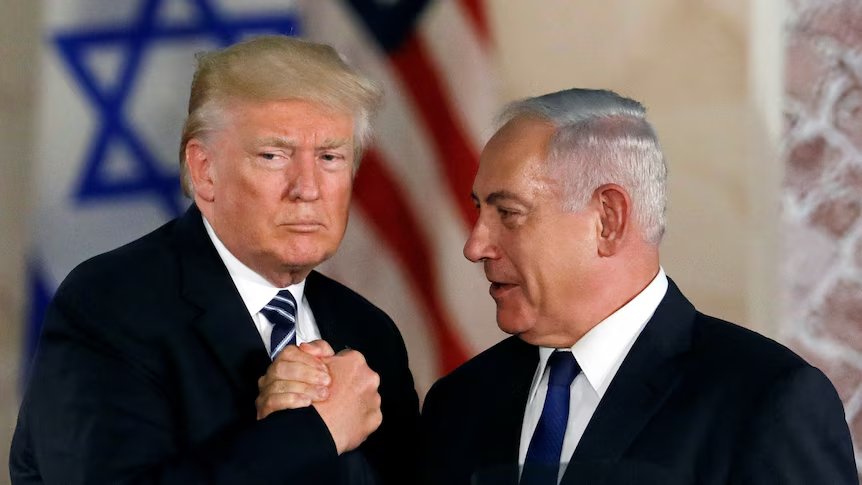
The reported influence of Israeli Prime Minister Benjamin Netanyahu and Mossad chief David Barnea in advocating military action also deserves scrutiny. Israel had its own security calculations and strategic objectives in confronting Iran. Those interests could overlap with American interests, but the two countries did not necessarily face identical risks or possess identical political priorities.
A major power cannot outsource its strategic judgment to an ally, however close that ally may be. The responsibility for deciding whether a war serves American national interests rested with the American president and his administration.
Four objectives, one strategic problem
The United States entered the conflict with several interconnected objectives. These included eliminating Iran’s nuclear enrichment capabilities, destroying its ballistic missile programme, weakening its relationships with Hamas, Hezbollah and the Houthis, and ultimately bringing about regime change.
These objectives were ambitious individually. Pursuing all of them through a single military campaign made the strategy even more difficult.
The nuclear question illustrates the problem. Destroying facilities or damaging enrichment infrastructure may delay a nuclear programme, but it does not necessarily eliminate the knowledge, technical expertise and industrial capacity required to rebuild it. Without reliable inspections and a negotiated framework, military operations cannot provide lasting assurance about the future of Iran’s nuclear activities.
The same distinction applies to ballistic missiles. Air strikes can destroy launch sites, production facilities and stored weapons. They can substantially reduce a country’s military capabilities. But eliminating an entire missile programme is a much broader undertaking, particularly when relevant infrastructure is dispersed, concealed or capable of being reconstructed.
The regional network of Iranian relationships presents another challenge. Hamas, Hezbollah and the Houthis have their own political, organisational and domestic foundations. Iran’s support has been important to their capabilities, but these groups cannot simply be treated as extensions of the Iranian state. Weakening Tehran does not automatically dissolve their political influence or organisational structures.
Regime change was the most consequential and least predictable objective. Even if military operations severely weaken a government, they cannot guarantee that its replacement will be democratic, stable or favourable to the United States. Political outcomes emerge from domestic struggles, institutional arrangements and social forces that external military powers cannot fully control.
Military success is not strategic victory
By November 2026, the central strategic question is no longer whether American and Israeli forces have inflicted substantial damage on Iran. They have. The more important question is whether that damage has produced the political outcomes Washington originally sought.
The evidence suggests a considerable gap between military achievements and strategic objectives. Iran’s leadership suffered a historic shock, including the killing of Supreme Leader Ali Khamenei on February 28. Yet the Islamic Republic survived, reorganised its leadership and continued to exercise state authority. The Congressional Research Service has also described the conflict as evolving into a war of attrition, with the United States and Iran facing continuing military, economic and political costs.
The collapse of the June memorandum of understanding and the resumption of limited hostilities further demonstrate the absence of a durable political settlement. Meanwhile, the conflict’s consequences have extended beyond Iran and the United States. The Strait of Hormuz has become a major source of international economic and security concern, exposing the vulnerability of global energy and maritime trade to regional escalation.
It would therefore be premature to claim that every American military objective has completely failed. Iran’s military capabilities have been degraded, and the full extent of the damage to its nuclear and missile programmes remains contested. But degrading an adversary is not the same as achieving the political objectives for which a war was launched.
The limits of American power
The Iran conflict offers a wider lesson about the nature of power in international relations. Military superiority is an important instrument of statecraft, but it is not a substitute for political judgment. A country may possess the world’s most sophisticated aircraft, precision weapons and intelligence networks and still fail to translate battlefield advantages into a favourable political settlement.
The United States entered the conflict with an apparent belief that overwhelming force could compel a transformation of Iran’s political system. That belief underestimated the resilience of states, the complexity of domestic political structures and the capacity of adversaries to impose costs beyond the battlefield. It also overlooked the possibility that a government facing an existential external threat might become more determined to resist rather than surrender.
The most serious failure, therefore, may have occurred before the first strike was launched. A war without a credible theory of political victory is not a demonstration of strategic strength. It is a gamble with national resources, regional stability and human lives.
Washington must now confront the difference between what it can destroy and what it can achieve. If the purpose of military action was to eliminate specific threats, those objectives must be assessed separately and honestly. If the purpose was to replace Iran’s political system with a government willing to accept American demands, the strategy has yet to deliver that outcome.
The ultimate test of a foreign policy is not the scale of destruction it can inflict, but whether it produces a more secure and sustainable political order. The Iran war demonstrates that even a great power can make a profoundly irrational decision when its ambitions are built on an unrealistic understanding of military force. Strategic rationality begins with recognising the limits of power—not assuming that superior firepower can overcome them.
John Mearsheimer
American political scientist