
Editorial
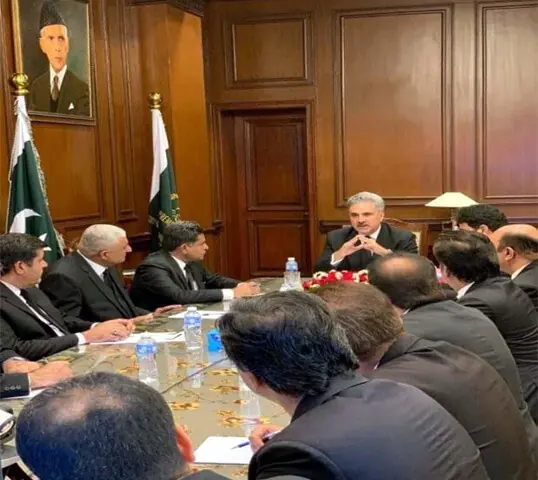
The FBR has released the Revenue Division Year Book for 2022-23. This document highlights the trends in the level and the composition of revenues from different federal taxes. The performance of revenues collected by the FBR can be seen as positive in 2022-23 in view of a shortfall of only 0.5% in the attainment of the annual target. The target was Rs 7,200 billion and the actual revenue was Rs 7,164 billion. However, the growth rate achieved in relation to 2021-22 was 16.5%. This is significantly lower than the nominal GDP growth rate of 26% in GDP. One of the main reasons for the lower growth rate in FBR revenues is the substitution of some of these revenues, by reduction in tax rates, with the imposition of the petroleum levy. The Ministry of Finance treats the petroleum levy as a source of non-tax revenue, while IMF considers it as a part of federal tax revenues. Based on the IMF classification, petroleum levy revenues are merged with FBR revenues. This raises the total federal tax revenues in 2022-23 to Rs 7,744 billion. The corresponding revenues in 2021-22 were Rs 6,276 billion. The growth rate of tax revenues is higher at 23.4%.
However, this is still below the GDP growth rate. As such, the federal tax-to-GDP ratio has fallen from 9.4% to 9.1% of the GDP. This is even more disappointing when this implies a drop of 1% of the GDP from the level attained in 2017-18. There is also a wide divergence in the growth rates of different federal taxes in 2022-23. The very good news is that the income tax has shown a phenomenal growth rate of over 43%, perhaps one of the highest ever. This has facilitated a significant move towards making the tax system more progressive. There is a negative growth of 7.8% in revenues from customs duty, while there is an increase of only 2.3% in revenues from the sales tax. The performance of excise duty revenues is somewhat better with a growth rate of 15.4%. There is need to explain the variation in the performance of different taxes in 2022-23, starting with reasons for the extraordinary performance of the income tax. The federal budget for 2022-23 did include some progressive taxation proposals. These proposals included, first, a presumptive tax on market value of the more than one property owned, second, enhancement in the advance tax on purchase of property, third, tax payers, including companies, with an annual income of Rs 300 million or more to pay 2% additional tax, fourth, increase in advance tax on large motor vehicles and, fifth, enhancement in tax rate on banking companies from 39% to 45%.
Please, subscribe to the monthly magazines of republicpolicy.com
The impact is that the revenue from the advance tax component of the income tax on corporate entities has shown a handsome growth of 66%. Also, the revenue with returns has increased by 52%. Within withholding taxes, the advance tax on sales of properties has shown an extraordinary jump in revenue of 340% in line with the above-mentioned taxation proposal. Other withholding taxes which have shown high growth include, first, the advance tax on interest payments. Given the quantum jump in interest rates it is not surprising that revenues from this source doubled in 2022-23. Other relatively big increases were seen in the tax payments against salary income and on large electricity bills. Given the transition to a large petroleum levy with some reduction in FBR tax rates on these products, it is necessary to quantify the overall tax burden on POL products, including the petroleum levy. FBR tax revenues from POL products are estimated at Rs 722 billion in 2022-23, as compared to Rs 840 billion in 2021-22, implying a drop of 14%. However, the revenue yield from the Petroleum Levy jumped by 456% from Rs 127 billion in 2021-22 to Rs 580 billion. Overall, the total federal revenue from POL products is estimated at Rs 1302 billion in 2022-23, with a high growth rate of 35%. Needless to say, this is contributing to greater regressivity of the tax system, because a large part of sales of HSD oil is for transportation of agricultural inputs and outputs.
Please, subscribe to the YouTube channel of republicpolicy.com