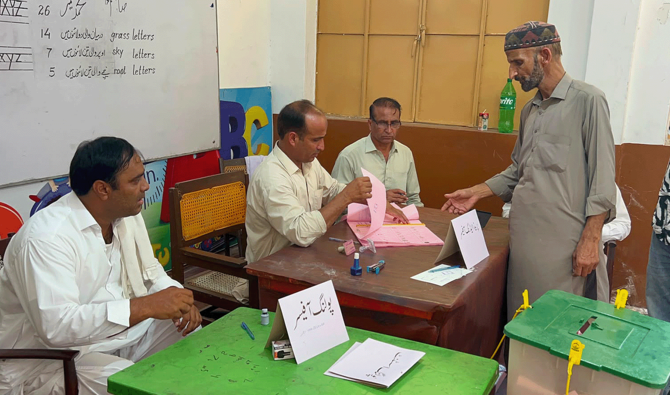

ISLAMABAD — Polling for the first phase of general elections in Azad Jammu and Kashmir’s (AJK) Mirpur division concluded on Monday evening under a blanket of heavy security, capping a day marked by surprisingly robust voter engagement and lingering regional tension.
The voting, which spanned 13 constituencies, was originally scheduled to end at 5:00 PM. However, the AJK Election Commission extended the deadline by an hour after witnessing an “unusual” influx of voters at polling stations across the division. Chief Election Commissioner Justice (retd.) Ghulam Mustafa Mughal confirmed the extension, noting that vote counting began shortly after polls closed at 6:00 PM, with results set to be transmitted in phases.
While Chief Election Commissioner Mughal characterized the overall process as peaceful, the day was not without tragedy. Local media reported that a violent clash between rival political groups resulted in one death and left three others injured.
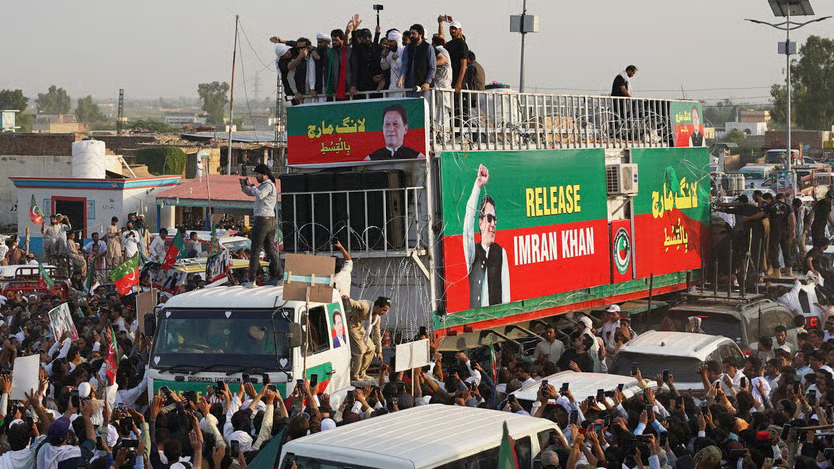
The vote follows weeks of profound civil unrest across the territory. The current election cycle was restructured into three distinct phases following widespread protests led by the Joint Awami Action Committee (JAAC). Although the civil rights movement was banned last month under anti-terrorism laws, its weeks-long agitation and political boycott have cast a shadow over the electoral process. Recent clashes between demonstrators and security forces in the region have tragically claimed around 30 lives.
At the center of the JAAC’s boycott is a demand to abolish the 12 assembly seats reserved for Kashmiri refugees living in Pakistan’s Punjab, Sindh, and Khyber Pakhtunkhwa provinces. Demonstrators argue these seats allow Islamabad’s mainstream political parties to exert undue influence over government formation in Muzaffarabad. Both Pakistani and AJK authorities firmly reject these allegations. Furthermore, the JAAC’s legal challenge hit a major roadblock last month when the AJK Supreme Court ruled that the refugee seats carry constitutional protection and cannot be dismantled through administrative action.
To prevent further disruptions, security was exceptionally tight throughout Mirpur division, where over 1.4 million registered voters—724,811 men and 675,626 women—were eligible to choose from 288 candidates. Authorities deployed more than 18,500 law enforcement personnel alongside roughly 2,100 Pakistan Army troops to safeguard 2,316 polling stations, over half of which (1,241) had been categorized as “highly sensitive.” The heavy deployment followed stern warnings from AJK Chief Secretary Khushal Khan against any attempts to destabilize law and order.
This election will ultimately determine 45 seats in the AJK Legislative Assembly, comprising 33 territorial constituencies and the 12 refugee seats. Following the conclusion of the Mirpur phase, the focus shifts to the Muzaffarabad division and the refugee constituencies, where voting is scheduled for August 2. The final phase of polling will take place in the Poonch division on August 10.