
Editorial
“When leaders in East Asia try to modernize their societies, they can rely upon the historical experience of their societies. But when the leaders of South Asia attempt to modernize, they can’t bring up the historical experiences of modernization.”
Our (South Asian) experience with the modernization and meritocratic system starts from the colonial history. Tribal instinct dominates. The loyalty of an individual with family is stronger than the loyalty of an individual with the state. People join the public service to serve local interests, not to serve the state.
In South Aisa, people are obsessed with power, patronage, and rents. They want government jobs because the incentive structure does not value the hard work. Not merely common people, but our industrialists want to work inside the heavy walls of state-bestowed protections. They heat competition.
Our culture is hereditary and discretionary. A competent employee of a company cannot be the manager/CEO of that company because the son of the company will not inherit this company. As Arthashastra notes, “Leaders should appoint people according to their abilities.” The leader will decide who is on merit or not.
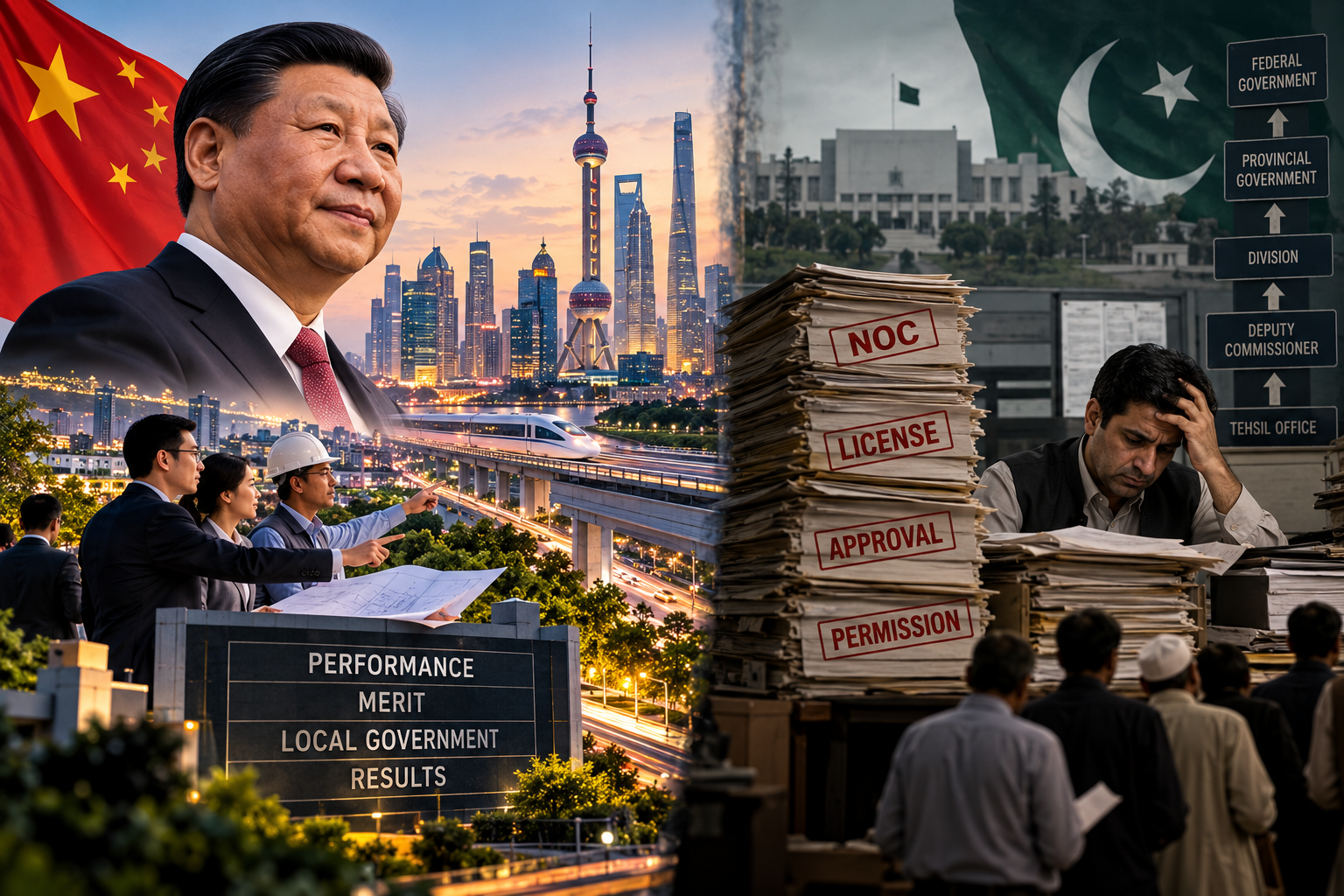
But at the same time, there was a different culture. As a result of the big intellectual revolution, Chinese thought merit would be determined by academic excellence and experience. Solely the leader’s wisdom can’t decide the fitness of the officers.
If Pakistan is to modernize it must improve quality of the civil servant. Only a professional civil service can serve. Critically, it does not mean that Pakistan will be another Japan or Germany. After modernization and professionalizing, Pakistan will be better version of itself.