
Arshad Mahmood Awan
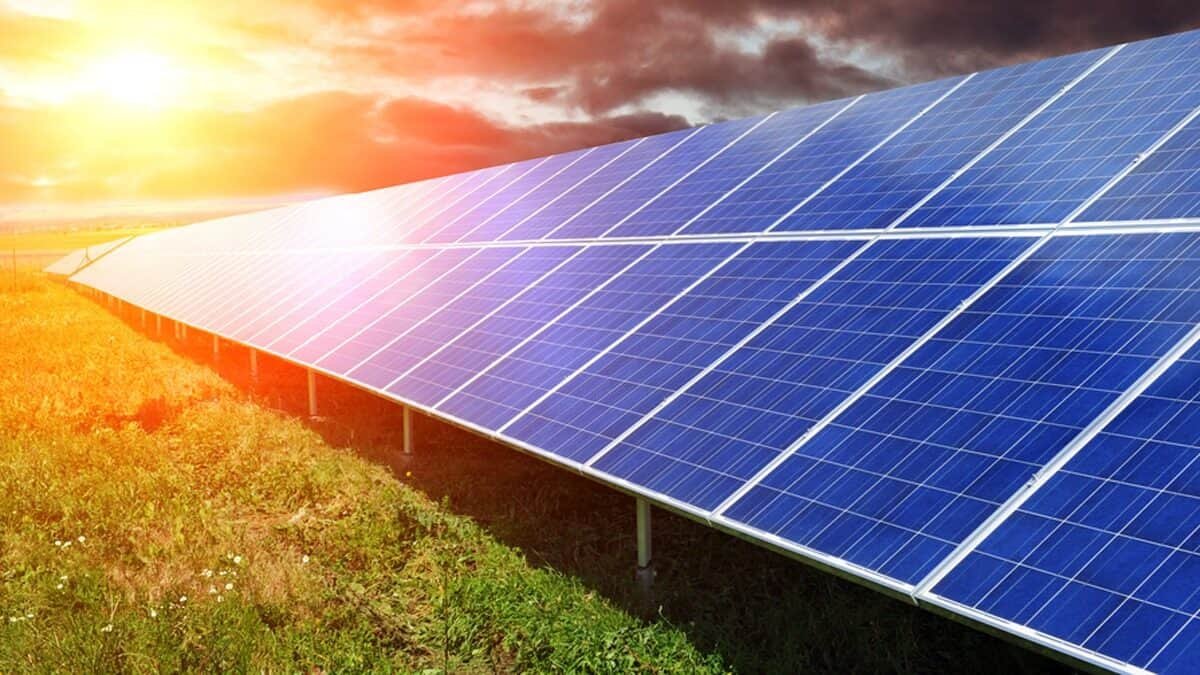
For three years, the story of Pakistan’s solar revolution was told entirely through panel import figures. Every fresh release of customs data brought another record: more megawatts crossing the border, more shipping containers filled with modules, more households cutting ties with the national grid. That narrative arc is now bending downward. And the numbers suggest this shift began months ago, not at some point in the distant future.
The deceleration that analysts had been watching for has turned into outright contraction. Between January and May 2026, Pakistan imported 4,574 megawatts worth of solar panels, compared to 11,781 megawatts during the same five-month window in 2025, a decline of 61 percent. The dollar figures tell an almost identical story, falling 54 percent to $514 million from $1.12 billion a year earlier.
This does not mean the solar market itself is contracting. Cumulative panel imports had crossed 55,700 megawatts by the end of May, and the total continues to grow every single month. What is slowing is the pace of new additions, not the underlying base that has already been built.
Part of the explanation lies in simple economics. Four years ago, Pakistan was paying under $0.30 per watt for imported panels. Today that figure sits at roughly a third of that level. Module prices globally have fallen more than 70 percent since 2017, sliding from about $0.38 per watt down to somewhere between $0.10 and $0.12 per watt through 2026.
Solar panels, in effect, have completed their transformation into a plain commodity. The conditions that produced the extraordinary import frenzy of 2023 and 2024, when Pakistan bought more than 14,000 megawatts of panel capacity in a single fiscal year, are unlikely to repeat themselves purely on pricing grounds. Module costs can only fall so much further before manufacturers stop finding it worthwhile to ship them at all.
On its face, a cooling panel market looks like a simple case of demand running its course: the early adopters have already installed their systems, urban rooftops are filling up, and the easiest customers to convert have already converted. But look one line further down the import ledger, and an entirely different picture starts to take shape.
Lithium-ion battery imports have quietly transformed from a negligible line item into a genuine and accelerating trend. Battery imports climbed from just $42 million in fiscal year 2023 to $280 million in fiscal year 2026. Strikingly, the final quarter of FY26 alone accounted for roughly half of that full year’s battery import bill, a signal that momentum is building rather than fading.
This inflection point is arguably the real story unfolding beneath the surface. Pakistan’s solar market spent its opening phase chasing raw capacity, racing to get panels onto as many rooftops as possible, as cheaply as possible, largely to escape grid electricity tariffs that climbed steadily through 2023 and 2024. That first phase is now mathematically slowing, simply because much of the easily convertible demand has already been captured. What remains is a market that increasingly wants to store the electricity it generates rather than merely produce it during daylight hours, a shift from partially offsetting grid dependence to abandoning it almost entirely.
Additional evidence for this shift comes from the gap between panels imported and panels formally registered under net metering arrangements. By the close of fiscal year 2025, cumulative panel imports stood at approximately 47,200 megawatts. Yet officially net-metered capacity, as reported by the country’s distribution companies, totaled just 6,485 megawatts. That means at least 86 percent of everything imported never appeared as a formal, grid-connected net-metering installation.
Some portion of that gap can be attributed to panels sitting unused in warehouses, and some to ordinary installation delays. But a meaningful share almost certainly consists of systems that were never designed to connect to the grid at all: commercial and industrial setups built for self-consumption, hybrid inverter systems paired with battery storage, and fully off-grid installations in regions where net metering infrastructure simply does not exist. The rising battery import figures suggest this category is expanding, not shrinking.
None of this represents speculation dressed up as certainty. It reflects one dataset decelerating at precisely the moment a second, previously insignificant dataset begins to compound, the kind of handoff that, in most commodity market cycles, signals maturation rather than decline.
Pakistan’s solar journey from 2021 through 2024 was fundamentally a story about access, about getting as many households and businesses connected to cheap daytime power as quickly as possible. The more recent numbers point toward a quieter second phase now taking shape: not a question of who can install a panel, but who can afford to store the electricity that panel produces. The panel boom delivered Pakistan inexpensive daytime power. The battery numbers, still modest in absolute dollar terms but unmistakably on an upward trajectory, suggest the next contest will be fought over what happens once the sun goes down.
The best-selling books of Republic Policy Think Tank, including the landmark book The Bureaucratic Coup, are available at Vanguard Books, Liberty Books, Readings, Kitab Sarai, Sang-e-Meel, Saeed Book Bank Islamabad, National Book Foundation, and others across Pakistan. Contact for home delivery: 0300 9552542.