
Editorial
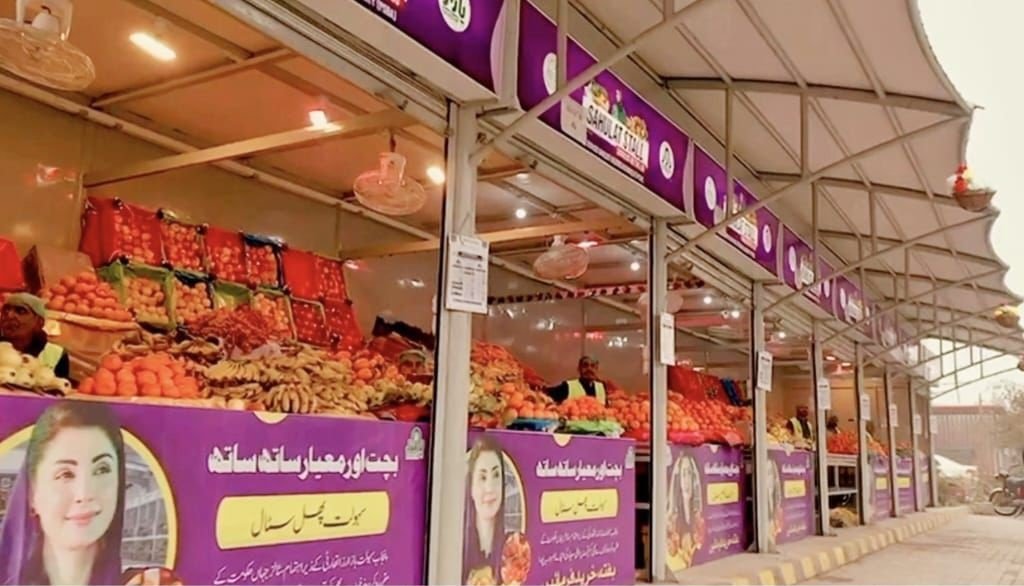
Punjab’s ongoing beautification and development initiatives deserve appreciation. Roadsides are being improved, encroachments are being removed, public spaces are being reorganised, and Sasta Sohulat Bazaars are being established in different cities. The government is also developing shops under these initiatives, with the stated purpose of providing ordinary traders access to commercial spaces at affordable monthly rents. These measures reflect an important recognition that urban disorder, unregulated roadside occupation and the exploitation of public spaces cannot be ignored indefinitely.
However, development must be assessed not only by what a city looks like after a project is completed, but also by what happens to the people whose livelihoods were previously connected to that space.
A recent visit to my hometown, Pattoki, brought this question into focus. At different locations, new Sasta Sohulat Bazaar facilities are being developed as part of the effort to remove encroachments and reorganise commercial activity. The initiative may improve the city’s appearance, ease traffic congestion and bring roadside trading under a more organised system. Yet one question remains largely unanswered: what happens to the street vendors, fruit sellers, vegetable sellers, food vendors and small cart owners who have earned their livelihoods from these very locations?
These people are an essential part of Pakistan’s informal economy. They sell bananas, seasonal fruits, vegetables, snacks, samosas and other everyday necessities. They do not own shops, commercial properties or shopping plazas. Their businesses operate through small carts, temporary stalls and modest roadside arrangements. Their capital is limited, their earnings are uncertain, and their ability to absorb additional costs is extremely low.
When a roadside location is transformed into a formal commercial market, the physical space may be improved, but the economic position of its previous occupants must also be considered.
The Positive Side: Breaking an Informal System of Exploitation
There is, undoubtedly, an important positive dimension to the government’s initiative.
For years, roadside vendors in many Pakistani cities have operated in a system that is neither fully regulated nor genuinely free. Some occupy spaces outside private shopping plazas, commercial buildings and shops, where property owners or influential contractors reportedly charge them monthly rent for allowing them to place their carts. These arrangements often create a parallel economy in which individuals exercise control over public-facing spaces without necessarily having any legitimate public authority over them.
Such arrangements can also contribute to traffic congestion, blocked pedestrian pathways, unmanaged waste and the expansion of encroachments. In some cases, the people controlling these spaces benefit financially while the wider public bears the cost of congestion and disorder.
The establishment of government-managed markets could disrupt this informal system of private rent collection. Instead of paying individuals who exercise informal control over roadside spaces, traders may have access to formally designated shops under a government framework. Public authorities can regulate rents, improve facilities and introduce transparent allocation procedures.
This is a meaningful step towards bringing commercial activity within an institutional framework. It can also weaken the political economy of informal occupation, where control over public space becomes a source of private income.
But breaking one system of exploitation does not automatically guarantee economic inclusion.
The Missing Question: Where Will the Cart Owners Go?
The central concern is that a fruit seller operating from a small cart cannot necessarily afford even a modestly priced shop. A person who sells a few dozen kilograms of fruit or vegetables each day may earn only a limited margin after purchasing stock, covering transportation and meeting household expenses.
For such a trader, a monthly shop rent, electricity bills, maintenance charges and other operating costs can be prohibitive. His entire business model depends on mobility, low overheads and the ability to sell directly to passing customers.
If the locations where these vendors previously operated are converted into formal shops, they may lose access to their established customer base without having the financial capacity to enter the new commercial arrangement.
The government may successfully remove encroachments, construct shops and improve the appearance of the area. But if the former street vendors cannot afford those shops, the development process may simply transfer commercial opportunities from one category of traders to another.
The question, therefore, is not whether these vendors should be allowed to obstruct roads or occupy public spaces without regulation. They should not. The question is whether regulation can be designed in a way that protects both the public interest and the livelihoods of people who depend on informal trade.
Beautification Is Not the Same as Development
This brings us to a broader question about the philosophy of urban development.
Beautification is primarily concerned with the physical appearance and organisation of a city. It seeks cleaner streets, improved roads, attractive commercial spaces and more orderly public environments. These are legitimate objectives, but they represent only one dimension of urban progress.
Development, by contrast, must also consider economic opportunity, social mobility, access to markets and the distribution of the benefits and costs of public policy.
A city cannot be considered developed merely because its roads are wider, its commercial buildings are newer and its roadside stalls have disappeared. It must also provide economic space for people who cannot afford formal commercial property.
The political economy of Pakistan makes this distinction particularly important. A substantial section of the population depends on small-scale informal businesses for survival. These enterprises are often the first entry point into self-employment for people with limited education, capital and access to formal employment. For many families, a roadside cart is not simply a commercial activity; it is their principal source of income and a means of maintaining economic independence.
Urban policy that overlooks this reality risks making cities visually attractive while economically excluding the very people who depend on them.
A More Inclusive Model of Sasta Sohulat Bazaars
The solution is not to abandon Sasta Sohulat Bazaars or allow encroachments to continue unchecked. Rather, the government should expand the concept to include different categories of small traders.
Not every vendor needs a permanent shop. Some require only a designated vending space, a small covered stall or permission to operate a mobile cart within a regulated zone. The government could reserve a proportion of market space for low-income vendors and introduce a separate, substantially lower rental category for cart owners and small food businesses.
A transparent allocation mechanism should identify existing vendors before removing their established trading locations. Their financial capacity should be assessed, and priority should be given to those who have genuinely depended on those spaces for their livelihoods. Designated vending zones, affordable daily or monthly charges, sanitation facilities and clear operating rules could bring these businesses into the formal urban framework without forcing them into unaffordable commercial arrangements.
This would also help the government achieve its traffic-management and anti-encroachment objectives. Vendors would operate within designated spaces, pedestrians would have clear pathways, and traffic would be less exposed to unregulated roadside activity.
Most importantly, the policy would recognise that the informal economy is not necessarily an obstacle to development. It can become part of an organised urban economy if the state provides appropriate institutional arrangements.
Development Must Include the People Who Cannot Afford It
The real test of Punjab’s beautification drive will not simply be the number of roads renovated, markets constructed or encroachments removed. It will be whether these improvements create better cities without pushing economically vulnerable citizens further to the margins.
The government deserves credit for challenging informal rent-collection arrangements, reclaiming public spaces and attempting to organise commercial activity. But it must also recognise that a person selling bananas from a cart cannot be treated in the same way as a commercial property investor. Their financial capacities, business models and economic needs are fundamentally different.
A beautiful city should not become a privilege reserved for those who can afford its new commercial spaces. Its economic opportunities must remain accessible to the small trader, the food vendor, the fruit seller and the ordinary worker.
Ultimately, the philosophy of development should be measured not only by how much disorder the state removes, but also by how many people it brings into a fairer and more productive economic system.
A city is not truly developed when its streets become beautiful but its poorest traders lose their place in the economy.