
Fajer Rehman
A year has passed since the blood dried at Pahalgam. Twenty-six people died in a terrorist attack in occupied Kashmir, and the world offered its condolences. Pakistan was among the first to express sympathy. India, however, chose a different path. Rather than pursue justice through evidence and international cooperation, New Delhi chose accusation, aggression, and the language of war. Twelve months later, South Asia is no safer, no wiser, and no closer to peace. The wounds of Pahalgam have been deepened, not healed, by the choices India made in its aftermath.
The most damning fact about this entire episode is also the simplest. India has not produced a single piece of solid, verifiable evidence linking Pakistan to the Pahalgam attack. Information Minister Ataullah Tarar stated as much on the first anniversary of the incident, and his words carried the weight of an inconvenient truth that New Delhi has been unable to refute. Pakistan offered a neutral international investigation. India refused. That refusal speaks louder than any accusation. A government confident in its evidence welcomes scrutiny. A government that retreats from scrutiny is protecting a narrative, not pursuing justice.
Pakistan has openly described Pahalgam as a false flag operation. Whether one agrees with that precise characterisation or not, the international community has been notably reluctant to accept the Indian version of events. Even within India itself, opposition parties and independent voices have questioned the official account. The holes in New Delhi’s narrative were not punched by Pakistani propagandists alone. They were exposed by Indian citizens asking the same questions that any functioning democracy should ask. Why was the security apparatus absent in a heavily monitored region? Why were no credible intelligence failures acknowledged? Why did the evidence, which should have been overwhelming if Pakistan was truly responsible, never materialise in any internationally verifiable form?
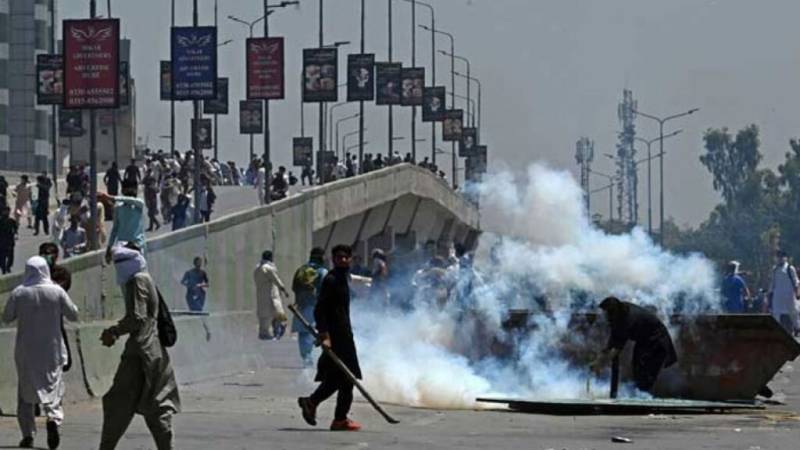
Into this vacuum of proof, India launched Operation Sindoor on May 6 last year — an act of unprovoked military aggression against Pakistani territory. Pakistan responded firmly and with restraint, demonstrating both the capacity to defend its soil and the discipline to avoid further escalation. The brief conflict that followed reminded the world that two nuclear-armed neighbours trading military blows is not a regional matter. It is a global catastrophe waiting to happen. The episode ended, but the hostility did not. Senior Indian officials, including cabinet ministers, have since described Operation Sindoor as merely “paused” — a deliberate choice of words designed to keep Pakistan under the shadow of threat. This is not the language of a responsible state. It is the language of a government that has found external aggression more politically useful than internal accountability.
The role of the Indian media in this entire saga deserves its own reckoning. A large and influential section of India’s television media abandoned all pretence of journalism and transformed itself into a war propaganda machine. During the Pahalgam crisis and throughout the conflict, these channels did not investigate, analyse, or question. They inflamed, incited, and performed outrage for ratings. They demanded Pakistani blood with a fervour that should embarrass any society that considers itself democratic. Journalism’s most fundamental obligation is to truth. When media houses become cheerleaders for military action without evidence, they do not serve the public — they endanger it. The damage done by irresponsible Indian media to the prospect of South Asian peace is incalculable and largely unacknowledged.
Pakistan, for its part, has consistently chosen the harder and more honourable path. It offered dialogue when India chose silence. It proposed neutral investigation when India chose accusation. It exercised military restraint when provocation was at its height. And it continues, even now, to call for engagement as the only rational resolution to disputes that have festered for over seven decades. This is not weakness. It is strategic maturity, born from the understanding that war in South Asia has no winners — only degrees of destruction.
The issues that divide India and Pakistan are real and serious. Kashmir remains an unresolved dispute of historic proportions, a wound kept open by occupation, denial, and periodic violence. Water-sharing agreements are strained as climate change reduces river flows and both nations compete for a shrinking resource. Security concerns, cross-border tensions, and the management of non-state actors are legitimate challenges that require sustained diplomatic engagement. None of these issues can be resolved through missile strikes or television theatre. Every single one of them requires precisely what India is currently refusing to provide — a willingness to sit across a table and talk.
The world in which this standoff is playing out is already saturated with conflict. The Middle East is once again sliding toward broader confrontation. Europe has not recovered from the trauma of the Ukraine war. Global institutions designed to mediate disputes are weakened and overstretched. This is not the moment for another nuclear-armed conflict zone to heat up. The hardliners in New Delhi who speak casually of resumed operations, who wave the Pahalgam tragedy as a political banner rather than mourning it as a human catastrophe, must reckon with what a full-scale India-Pakistan conflict would mean — not just for the two nations, but for the entire region and beyond.
Pahalgam’s victims deserve justice. Real justice, not manufactured blame. They deserve an honest investigation, not a geopolitical weapon built from their deaths. Pakistan’s offer of a neutral probe was the right response. India’s rejection of it was not. Until New Delhi finds the courage to pursue truth over narrative and dialogue over aggression, the subcontinent will remain hostage to its worst impulses and most dangerous instincts. Peace is still possible. But it requires honesty, evidence, and the willingness to talk. One year after Pahalgam, India has offered none of the three.