

Editorial
Why should a society busy with inflation, elections and unemployment care about warfare? The answer lies in an old warning, often attributed to Leon Trotsky: you may not be interested in war, but war is interested in you. No citizen is outside its reach anymore. The soldier once rode away from home to fight, as Richard Lovelace wrote: “Tell me not, Sweet, I am unkind, / That from the nunnery / Of thy chaste breast and quiet mind / To war and arms I fly.” Today war does not wait for anyone to fly towards it. It comes to the street, the phone and the living room.
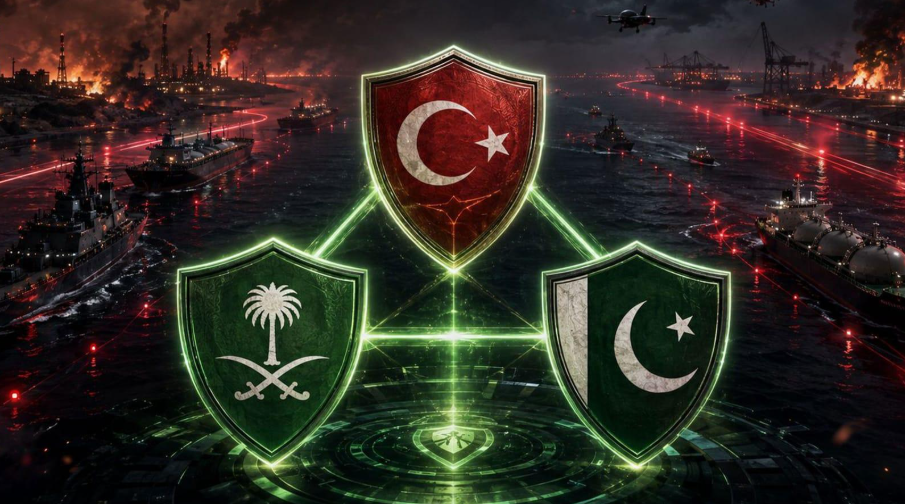
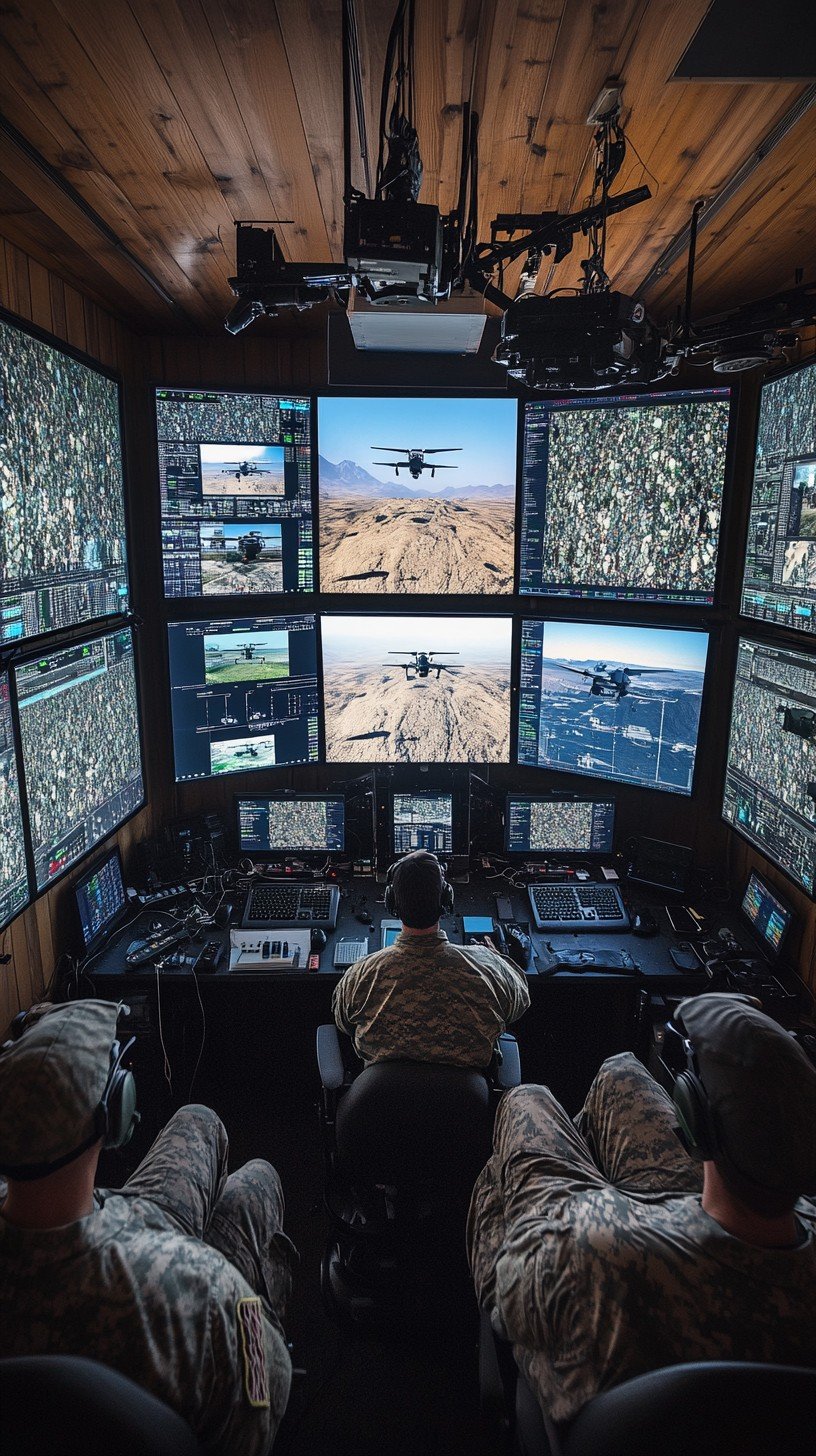
Warfare is being redefined by technology and artificial intelligence. It is becoming more lethal, faster and more precise. Above all, it is becoming customised. The world wars killed millions in mass slaughter, with whole generations lost in trenches and cities. The war of the future will look different. It will be cold, remote and personal. It will be non-visceral for the one who presses the button, and final for the one who is targeted. Its danger lies in its transparency, its predictability and its certainty. If a person is marked by an algorithm, escape becomes almost impossible. This is the surreal side of modern war: death that is calculated, scheduled and delivered.
Every age has shaped its own war. Agrarian societies fought with men and horses. Industrial societies fought with machines and mass armies. The information age brought networks and precision. Now the post-information age of AI is driving the battlefield. The armies that matter in future will be algorithmically driven and able to handle autonomous weapon systems. They will need to deal with two opposite problems at once: too much information, and the paralysis that it causes.
Yet caution is necessary. We have grown fond of fashionable ideas and glamorous terms. Many AI-driven systems are still at the frontier of technology and remain largely untested in real combat. The Ukraine war is the laboratory, the petri dish, of this new age. The world hears about the drones that strike their targets. It hears far less about the many that are jammed, shot down or simply lost. Legacy platforms such as tanks, artillery and infantry remain valid. War is still as visceral as it always was. Blood is still shed, and ground is still held by human beings.
What has changed is the way the domains of war connect. Land, sea and air have existed as long as mankind. Space and cyber have now been added, and cyber binds all of them into one synergy. The result is frightening. The kill chain, the time between detecting a target and destroying it, used to take days or weeks. It is now being compressed into minutes and seconds. Every level of war, tactical, operational and strategic, feels this impact directly. The philosophy of war is changing. Its very nature is changing. Its pace and tempo are changing.
Consider the classic theory. Carl von Clausewitz described war as a trinity of passion, reason and chance, which later thinkers mapped onto the people, the government and the military. That framework held for nearly two centuries. Then Martin van Creveld argued that modern conflict had become non-Trinitarian, shaped by non-state actors who stand outside the neat triangle of the nation-state. Add to this a further force: technology itself, a non-human agent. What does a strategist do when the enemy is non-state and the weapon is non-human? Can the old trinity still explain such a war? It cannot, at least not in its original form. The future will be shaped more and more by non-human agency, and even the famous fog of war is being redefined. Machines may clear some of the fog, but they also create new layers of it.
This shift affects everything. It affects how armies are organised, how doctrines are written and how laws are framed. International humanitarian law was built for wars fought by humans against humans. It must now be adapted to remain in step with the principles of distinction, proportionality and necessity, in a world where a machine may choose the target.
Then there is the electromagnetic spectrum, a term found in all serious military literature today. It runs from satellites and radars to radio waves, microwaves, cryptographic channels and ultra-low frequencies. It is invisible, yet it is the new high ground. Whichever force dominates the spectrum will dominate the battlefield. Communications, navigation, drones and missiles all live or die within it.
Here lies the most uncomfortable truth. Every person reading this is a willing or unwilling participant in future warfare. Modern war does not spare the non-combatant. In a sense, every civilian is now a combatant. Ukraine proved this early. Civilian drone operators joined the fight within days. Private IT companies and volunteers raised funds, wrote code and defended networks. The war was carried not only by the military stack but by the civilian one as well. Software engineers, hobbyist pilots, telecom workers and ordinary citizens with smartphones became part of the national defence.
What does this mean for a country like Pakistan? It means defence can no longer be left to the armed forces alone. Universities must produce engineers who understand AI and cyber security. Industry must be ready to supply both hardware and code. The state must invest in research, protect its digital infrastructure and train its institutions to think in terms of the whole spectrum. Policymakers must also take part in the global debate on the ethics and law of autonomous weapons, rather than waiting for others to set the rules.
Understand this clearly. The next war will not knock at the door of the barracks first. It will enter through the network, the satellite and the screen. A nation that prepares only its soldiers will be caught unprepared. A nation that prepares its citizens, its scientists and its laws will stand a chance. War is interested in all of us. It is time we became interested in it.
The best-selling books of Republic Policy Think Tank, including the landmark book The Bureaucratic Coup, are available at Vanguard Books, Liberty Books, Readings, Kitab Sarai, Sang-e-Meel, Saeed Book Bank Islamabad, National Book Foundation, and others across Pakistan. Contact for home delivery: +92 341 4222501.