

Editorial
Pakistan has become accustomed to thinking of development in terms of construction, new schemes, large budgets and the laying of foundations. When a village lacks a library, a learning centre, a women’s workspace or an emergency shelter, the conventional response is often to propose a new building, allocate funds, initiate a project and wait for it to materialise. Yet there is another way of thinking about development: before building something new, look at what already exists but is no longer being used.
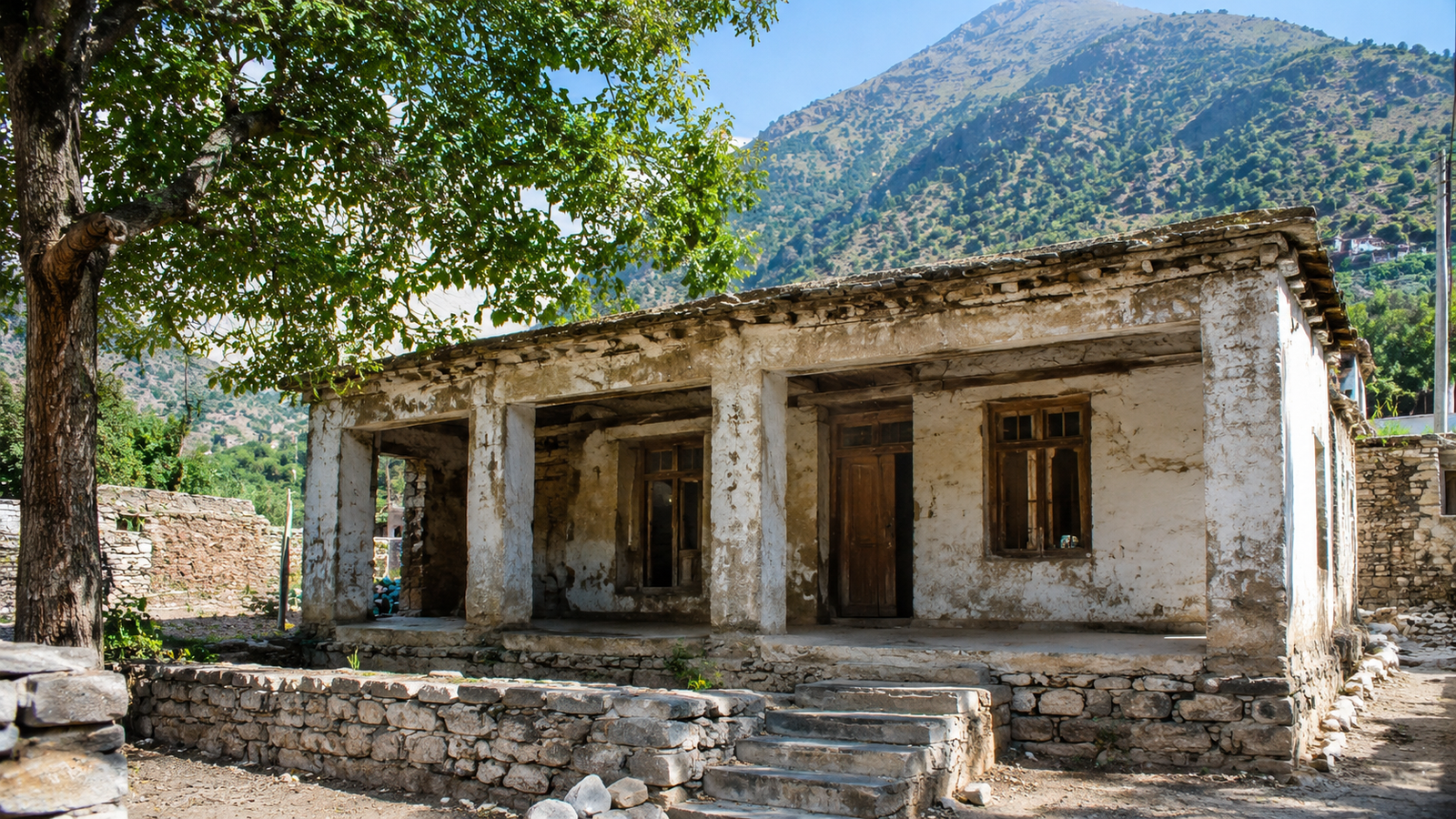
During a visit to Khyber-Pakhtunkhwa, I came across several houses standing empty in otherwise beautiful villages. Some appeared abandoned, while others had remained locked for years. Amid the mountains, settlements and welcoming communities, these vacant buildings raised a simple but important question: could an unused house become an opportunity for an entire village? Could a private property, with its owner’s consent, serve a wider social purpose without requiring the government to spend millions constructing a new facility?
Pakistan needs to explore this idea seriously. A village property-sharing scheme could turn abandoned or underutilised houses into small but functional community facilities. The concept is neither complicated nor dependent on expensive infrastructure. It requires identifying existing properties, securing voluntary agreements with their owners, renovating buildings where necessary, and allowing local communities to determine how they can best be used.
An empty house can serve many purposes. In a village where children have no quiet place to study, it could become a community library, tuition centre or digital learning room equipped with books, computers and internet access. Where women lack access to workplaces or facilities to develop their skills, a vacant property could be converted into a shared workshop for sewing, embroidery, cooking, handicrafts or other income-generating activities. Such a space could connect women with markets, facilitate collective production and allow them to develop small businesses without having to leave their villages.
The same approach could address agricultural challenges. Farmers frequently face limitations in storage, particularly when they need to preserve their produce and avoid selling it immediately at unfavourable prices. Suitable vacant buildings could be converted into community storage facilities for grains, fruits, vegetables or agricultural equipment. While not every house would be suitable for this purpose, a village-level assessment could identify properties that can be adapted to local agricultural needs.
Emergency preparedness is another important possibility. Villages vulnerable to floods, landslides, heavy snowfall or other disasters often lack designated spaces where residents can temporarily seek protection. A structurally sound house, maintained under an agreed arrangement, could serve as a small emergency facility. It could contain first-aid supplies, blankets, clean drinking water, basic medicines and other necessities. Instead of waiting for a disaster to expose the absence of local facilities, communities could prepare in advance by using buildings that are already available.
This approach is not without international precedents. South Korea has explored the reuse of vacant rural houses for accommodation, businesses and cultural facilities. Japan has pursued abandoned-house regeneration initiatives, including efforts in Onomichi to bring neglected properties back into community and economic use. In the United Kingdom, community organisations have repurposed unused buildings for local services, while Milan’s Cascina Cuccagna demonstrates how a neglected historic property can be revived as a community space offering cultural and social activities. These examples illustrate a broader principle: unused property does not necessarily have to become a liability. With the right management, it can become an asset.
Pakistan, however, does not need to replicate these models blindly. It needs a programme designed around the realities of its villages, property ownership arrangements, local economies and administrative capacity.
The first step should be a voluntary village property-sharing registry. Local administrations could identify vacant and underutilised houses, assess their condition and invite owners to participate. Participation must remain voluntary, with clear written agreements defining the duration of use, responsibilities, renovation costs, maintenance arrangements and the conditions under which the property can be returned to its owner.
The incentives must also be reasonable. Owners could receive modest rental payments, a share of income generated by commercial activities, or government-supported maintenance and renovation in exchange for making their properties available for an agreed period. The state would not need to acquire ownership of these buildings. Its role would be to facilitate agreements, provide technical assistance where necessary, ensure accountability and help communities put the properties to productive use.
Village committees should oversee the programme, with representation from women, young people, local residents and relevant administrative officials. Their responsibility would be to identify community needs and decide which use would deliver the greatest benefit. A vacant house should not automatically become a library simply because libraries are desirable. In one village, the priority may be education; in another, women’s livelihoods; in a third, agricultural storage or emergency preparedness. Development should respond to the needs of the community rather than impose a uniform design from the provincial capital.
Transparency and safety, meanwhile, cannot be optional. Every participating property should undergo an appropriate structural assessment before public use. Renovation, sanitation, electrical safety, accessibility, lighting, secure entrances and basic operational standards should be addressed. Financial records, the purpose of each facility, its responsible management committee and public complaints procedures should be clearly established. Without these safeguards, a well-intentioned scheme could become another poorly managed public initiative.
The larger lesson is that development does not always begin with construction. It can begin with identifying resources that society has neglected, bringing them into productive use and organising institutions around them. Pakistan’s villages may already possess buildings, spaces and assets that could help address local problems. What is often missing is a mechanism to connect those resources with the people who need them.
An empty house does not have to remain a symbol of abandonment. It can become a classroom, a workplace, a storage facility, a shelter or a centre of community life. The cheapest development project may not be the one that builds the least, but the one that recognises the value of what has already been built.
Perhaps the key to a stronger village is already hanging in the lock of an unused house. Pakistan does not always need to lay the first brick. Sometimes, it only needs to open the door.