
By Fiza Rani
In the golden age of travel, we reminisce about the days when airplane seats were more spacious, the cuisine onboard was delectable, and you could whisk across the Atlantic Ocean in under three hours. However, those swift transatlantic flights became a thing of the past with the retirement of the Concorde in 2003. Nowadays, journeys between London and New York typically consume around eight hours, or a slightly shorter seven hours in the opposite direction. The quickest recorded flight on this route stands at just under five hours, thanks to a favorable jetstream. But now, the dream of supersonic travel is making a resurgence, and it’s not just any advocate; it’s NASA itself. The space agency envisions a future where a New York to London flight could be as short as 90 minutes, and it has laid out plans for this supersonic travel revolution.
This ambitious concept of supersonic travel has been revived by NASA, a name synonymous with pushing the boundaries of exploration. NASA’s latest vision has stirred excitement by suggesting that commercial flights traveling at speeds exceeding Mach 4, which translates to over 3,000 miles per hour, could become a reality in the not-so-distant future.
In a recent blog post discussing its “high-speed strategy,” NASA disclosed that it had conducted thorough research into the feasibility of supersonic travel. Their findings are nothing short of groundbreaking. The study, conducted at NASA’s Glenn Research Center, indicates that there is enormous potential for high-speed travel on approximately 50 well-established routes. However, this high-speed travel is not likely to be seen everywhere; its application would be limited to transoceanic routes. This limitation arises from the fact that supersonic flights over land are currently banned in countries like the United States due to concerns about sonic booms and their impact on the environment.
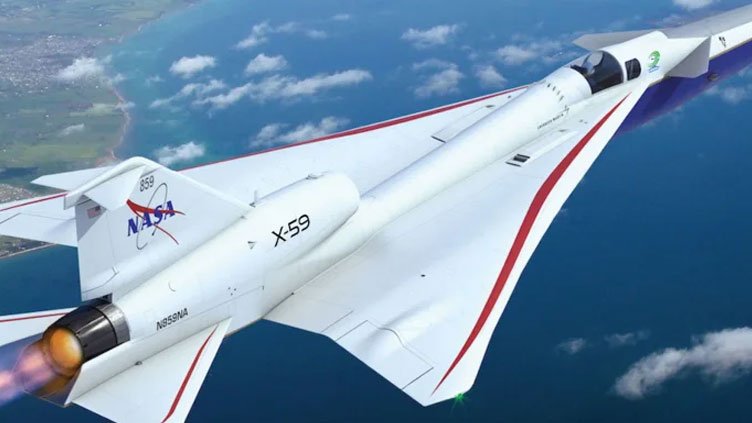
Undeterred by these obstacles, NASA is actively working on a solution to make supersonic travel a reality. They are developing what they call “quiet” supersonic aircraft, known as X-59s, as part of their ambitious Quesst mission.
The Quesst mission embodies NASA’s commitment to taking aviation technology to new heights. The objective is not just to revive the allure of supersonic travel but to do so in an environmentally friendly and responsible manner. Central to this mission is the development of supersonic aircraft that produce minimal noise, addressing a key concern that led to the prohibition of overland supersonic flights.
It’s worth noting that the concept of supersonic flight isn’t new. The Concorde, a marvel of engineering and aviation history, demonstrated that such rapid travel was possible. However, its retirement marked the end of an era. The Concorde, while incredibly fast, was criticized for being noisy and fuel-inefficient. This led to its withdrawal from service, leaving a void in the world of supersonic travel.
Now, NASA aims to fill that void with a new generation of supersonic aircraft that promise not only speed but also sustainability. The X-59s, with their quieter profile, may overcome the challenges that grounded their predecessors. If successful, these aircraft could revolutionize air travel, making long-haul journeys significantly shorter and more efficient.
Imagine the implications of supersonic travel for global connectivity and business. A flight from New York to London, currently taking hours, could be completed in mere minutes. This could potentially reshape the way people conduct international business, making it more accessible and time-efficient.
Furthermore, the reduction in travel time could contribute to significant environmental benefits. Shorter flights mean reduced fuel consumption and lower emissions, potentially aligning with global efforts to combat climate change. However, it’s essential to balance these benefits with the environmental impact of high-speed air travel, as supersonic flights are not without their challenges.
In the realm of aviation, NASA has set its sights on a thrilling frontier: supersonic travel at speeds surpassing Mach 2 and up to Mach 4, equivalent to a mind-boggling 1,535 to 3,045 miles per hour. To put this into perspective, the Concorde, celebrated for its astonishing speed, reached a maximum of Mach 2.04, which translates to approximately 1,354 miles per hour. Now, NASA envisions aircraft that could potentially complete a transatlantic journey in a jaw-dropping 90 minutes.
This vision marks a departure from the current regulations that restrict supersonic flights over land due to concerns about sonic booms and their environmental impact. NASA’s aim is not only to shatter speed records but also to usher in a new era of supersonic travel that is quieter, more efficient, and environmentally responsible.
The next phase of this groundbreaking pursuit is orchestrated by NASA’s Advanced Air Vehicles Program (AAV), which is set to delve into high-speed travel research. In this phase, NASA will collaborate with leading aerospace companies to craft designs and delve into the boundless possibilities of high-speed air travel. Moreover, they will dissect the associated risks and challenges, and pinpoint the indispensable technologies required to transform the dream of Mach 2-plus travel into a tangible reality.
Two prominent teams, one led by Boeing and the other by Northrop Grumman Aeronautics Systems, have assumed the mantle of this groundbreaking research. Their primary mission is to conceptualize and engineer aircraft that can maintain high-supersonic speeds while addressing the technical, regulatory, and environmental hurdles that have historically hindered supersonic flight.
This endeavor is not merely a quest for speed but a multifaceted exploration of how aviation can evolve in the 21st century. By pushing the boundaries of what is currently feasible, NASA and its collaborators are poised to revolutionize air travel.
Imagine a future where long-haul flights become fleeting affairs. A journey from New York to London, a route notorious for its duration, could be reduced to a fraction of its current time. This time warp in air travel could have profound implications for industries, businesses, and global connectivity. The ability to traverse the Atlantic Ocean in under 90 minutes could redefine the concept of distance and accessibility on a global scale.
However, it’s crucial to acknowledge the challenges inherent in this grand vision. One of the most significant hurdles is the ban on overland supersonic flight in various nations, including the United States. The restriction stems from the concern that sonic booms generated by supersonic aircraft can disrupt communities and harm the environment.
Addressing these concerns is where NASA’s “quiet” supersonic aircraft, the X-59s, come into play. These cutting-edge aircraft are designed to minimize noise and, by extension, mitigate the impact of sonic booms. They represent a crucial component of NASA’s strategy to make supersonic travel not only faster but also more harmonious with the environment.
Another critical aspect to consider is the potential environmental impact of high-speed air travel. While reducing travel time is undoubtedly alluring, it’s essential to strike a balance between speed and sustainability. The aviation industry has made significant strides in enhancing fuel efficiency and reducing emissions, and these advancements must continue as we explore the possibilities of supersonic travel.
In conclusion, NASA’s audacious pursuit of high-supersonic travel is a testament to human ingenuity and our relentless quest for progress. The notion of crossing continents in a fraction of the time we do today is undeniably exciting. However, this exhilarating vision must be accompanied by a commitment to responsible aviation that respects both our planet and the communities below. With dedicated research, innovative technology, and a focus on environmental stewardship, the dream of supersonic travel could soon become an everyday reality, reshaping the future of air travel as we know it.
Subscribe our website for latest updates:
https://republicpolicy.com/shop/
Read More