
Following the rally in Pakistan’s global Eurobonds, the country’s risk of default, as measured by credit default swaps (CDS), has reached a six-month low at 46.76% after the achievement of a $3 billion International Monetary Fund (IMF) deal last week. This improvement signifies a significant restoration of global investors’ confidence in the domestic economy. It paves the way for Islamabad to return to international bond markets shortly to raise new debt financing and boost foreign exchange reserves.
The government has set a target of raising $1.5 billion by issuing Eurobonds and Sukuk in global markets during fiscal 2024.
Credit default swaps (CDS) are insurance products that global investors purchase to protect against potential losses in the event of the government’s failure to repay international bonds upon maturity.
Head of Research at Arif Habib Limited, Tahir Abbas, revealed that the five-year CDS dropped by 12.40 to 46.76% on Tuesday following the incredible achievement of Friday’s $3 billion IMF deal. This marks a significant recovery of 77.12 percentage points over the past eight months, compared to the record high of 123.88% reached on November 21, 2022, when Pakistan’s $6.5 billion loan programme derailed and remained stalled until its premature end on June 30, 2023.
Despite this recovery, the 5-year CDS price of 46.76% remains elevated compared to the mere 2.75% recorded in March 2021, when the country had stable foreign exchange reserves, unlike the critically low level of $4 billion currently.
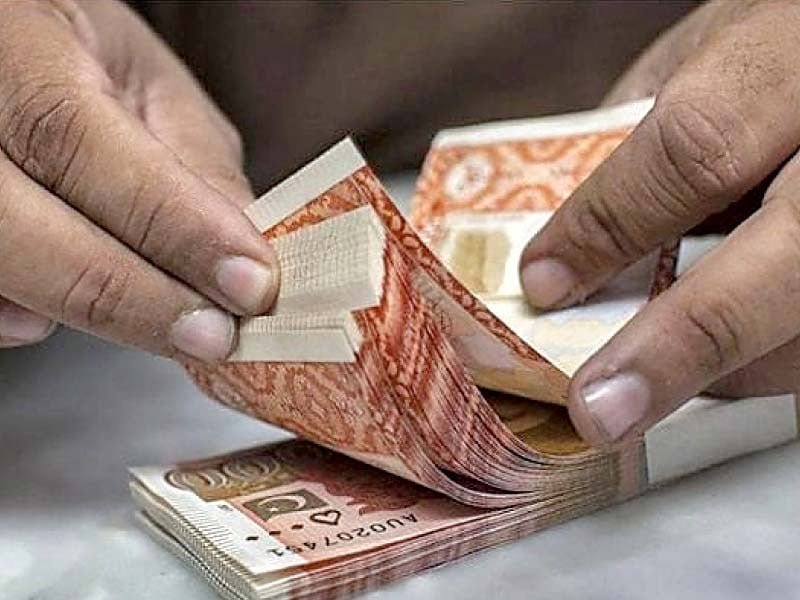
However, while the risk of default has decreased, the Pakistani currency failed to sustain Tuesday’s gains against the US dollar in the domestic interbank market on Wednesday. This is attributed to the high demand for foreign currency to clear the import backlog and make payments for liberalised imports under the IMF programme. The money dropped 0.71%, or Rs1.97, to Rs277.41 against the US dollar in the interbank market on Wednesday after experiencing a significant rebound of 3.83% on Tuesday.