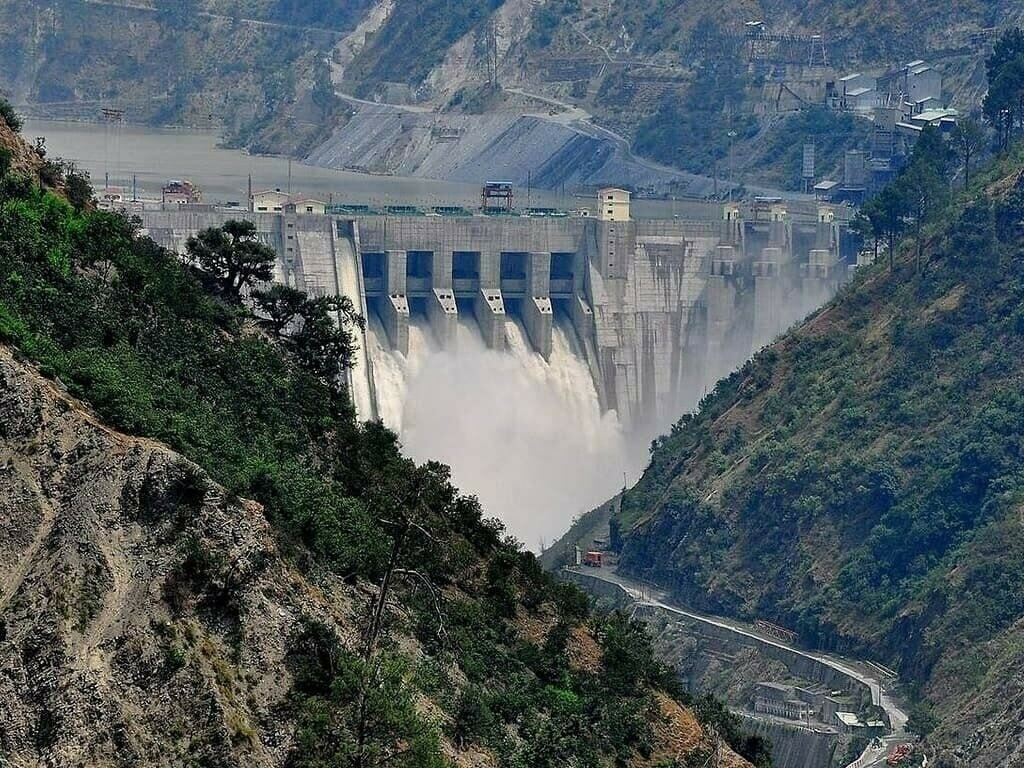

In a major win for Pakistan, the Permanent Court of Arbitration (PCA) in The Hague on Thursday rejected India’s objections to its assumption of jurisdiction in a dispute between the neighbouring countries over the Kishanganga and Ratle Hydroelectric projects, according to the Indus Waters Treaty.
Deciding in favour of Pakistan, the PCA ruled that it was indeed the competent authority to determine the Kishanganga dispute between Pakistan and India, sources in the Attorney General for Pakistan’s (AGP) office told republic policy.
Established in 1899 to facilitate arbitration and other forms of dispute resolution between states, the PCA is a non-UN inter-governmental institution that serves as a forum to address the dispute resolution needs of the international community.
“In a unanimous decision, which is binding on the Parties and without appeal, the Court rejected each of the objections raised by India and determined that the Court is competent to consider and determine the disputes outlined in Pakistan’s Request for Arbitration” Reuters quoted a court statement as saying.
Pakistan was represented by a team of international experts, assisted by a team from the AGP office. It included advocates Zohair Waheed and Leena Nishter, while Barrister Ahmed Irfan Aslam acted as Pakistan’s agent at the PCA.
The dispute pertains to concerns raised by Pakistan over India’s construction of the 330-megawatt Kishanganga hydroelectric project on the River Jhelum. It plans to construct the 850MW Ratle hydroelectric project on the Chenab in Indian-held Jammu & Kashmir.
Islamabad initiated legal proceedings on Aug 19, 2016, by requesting to establish an ad hoc Court of Arbitration under Article IX of the Indus Waters Treaty.
The step was taken after concerns were raised before the Permanent Indus Commission in 2006 for the Kishanganga project and in 2012 for the Ratle project.
Pakistan then sought a resolution through government-level talks held in New Delhi in July 2015. The decision to initiate proceedings came in response to India’s persistent refusal to address the raised concerns.
The Indus Waters Treaty provides two forums for settling disputes — the Court of Arbitration, which addresses legal, technical and systemic issues, and the Neutral Expert, which can address only technical problems. Pakistan requested establishing a Court of Arbitration because it had systemic questions requiring legal interpretation, sources said.
India responded to Pakistan’s initiation of the formal dispute settlement process with its overdue request for the appointment of a neutral expert, which Islamabad maintained was a demonstration of New Delhi’s characteristic bad faith, they said.
Fearing conflicting outcomes from two parallel processes, the World Bank, on Dec 12, 2016, suspended the processes for establishing a court of arbitration or appointing a neutral expert and invited both countries to negotiate and agree on one forum.
However, Pakistan and India could not agree, and the World Bank, after six years — during which India completed the construction of the Kishenganga project — finally lifted the suspension, created a court of arbitration, and appointed a neutral expert.
Pakistan believes that any risk of conflicting outcomes can be arrested through coordination and cooperation between the two fora, the statement said.
Pakistan is engaging with both fora; in contrast, and characteristic bad faith, India has boycotted the Court of Arbitration. In such a scenario, the court can proceed ex parte and is doing so.