

S. Alex Yang and Angela Huyue Zhang
The global artificial intelligence race is often presented as a competition between two contrasting economic models. The United States relies on private enterprise, entrepreneurial innovation, capital markets and competition, while China mobilises state institutions, industrial policy, public investment and strategic planning to advance its technological ambitions. This distinction is politically attractive and economically convenient, but it may obscure a more complicated reality: large-scale technological development requires coordination, patience, institutional stability and leadership that neither markets nor governments can guarantee on their own.
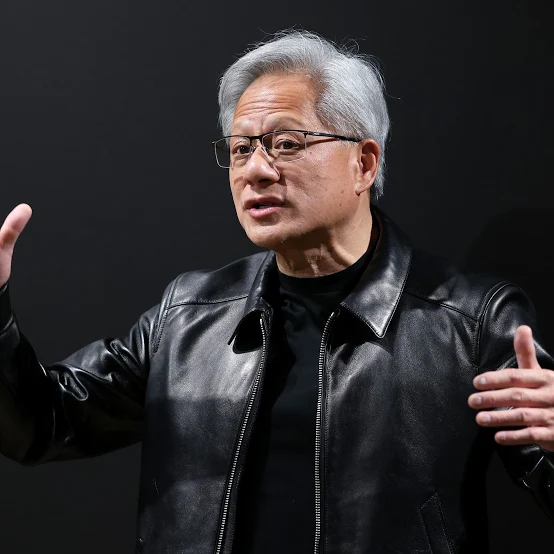
Nvidia’s dramatic leadership episode involving its co-founder and longtime chief executive, Jensen Huang, offers a compelling illustration of this dilemma. The reported ousting of Huang, followed by his unexpected reinstatement within a month, raises a fundamental question about the American model of technological development. If a corporation as central to the artificial intelligence industry struggles to operate without the person who built its strategic vision, how different is its dependence on individual leadership from the concentration of authority associated with state-directed economic planning?
Artificial intelligence is not an ordinary commercial product. Its development requires enormous capital investment, advanced semiconductor manufacturing, specialised computing infrastructure, energy supply, research laboratories, software ecosystems and sustained cooperation among businesses operating across different industries. The returns on these investments are uncertain, often distant and highly dependent on developments beyond the control of any individual company. Building the foundations of AI therefore requires more than entrepreneurial enthusiasm or the pursuit of quarterly profits. It demands a long-term strategic outlook.
This is where the conventional distinction between American markets and Chinese planning begins to lose its explanatory power. Markets are exceptionally effective at identifying opportunities, rewarding innovation, mobilising private capital and encouraging competition. But they are not always naturally equipped to coordinate investments across multiple sectors when the benefits are uncertain, interconnected and likely to emerge over decades. Governments, meanwhile, can mobilise resources and establish strategic priorities, but administrative planning may struggle with efficiency, technological uncertainty, incentives and the freedom to experiment.
The American AI ecosystem has increasingly relied on powerful corporate leaders to bridge this coordination gap. Executives with long-term visions can persuade investors to finance enormous projects, convince partners to commit resources, align hardware and software development, negotiate with infrastructure providers and maintain strategic direction through periods of uncertainty. In this arrangement, the chief executive becomes more than a manager of a corporation. He becomes a coordinating institution in his own right.
Jensen Huang’s significance to Nvidia reflects precisely this dimension of modern technological competition. Nvidia’s position in the AI economy is not simply the product of selling advanced chips. It is built around an ecosystem of computing hardware, software, developer tools, research capabilities and strategic relationships that reinforce one another. Maintaining such an ecosystem requires a leadership vision that extends beyond individual product cycles and understands how different parts of the technological landscape will evolve together.
When a corporation becomes deeply identified with its founder, however, the advantages of visionary leadership can become institutional vulnerabilities. Strategic continuity may depend disproportionately on an individual’s judgment, relationships, reputation and ability to persuade others. Investors, employees, suppliers and business partners may have confidence not merely in the corporation’s formal structure but in the person directing it. The organisation may appear institutionally powerful while remaining unusually dependent on one individual.
The reported reversal in Huang’s leadership status therefore points to a broader question about corporate governance in the age of AI: can institutions preserve a long-term technological vision without becoming dependent on the person who originally conceived it? The problem is not the presence of strong leadership. Indeed, complex technological industries often benefit from leaders willing to make difficult decisions, invest ahead of demand and tolerate uncertainty. The problem emerges when leadership becomes so centralised that the institution finds it difficult to function independently of its leader.
This challenge is not exclusive to the United States. China’s state-directed model also faces the tension between institutional planning and individual leadership. Government priorities can establish direction, coordinate investment and sustain strategic industries, but successful execution frequently depends on capable enterprises, engineers, entrepreneurs and managers who translate policy into technological progress. Central planning cannot eliminate the need for individual judgment any more than private markets can eliminate the need for coordination.
The difference lies primarily in where authority is concentrated and how coordination is achieved. In China, strategic direction is more explicitly embedded in state priorities, industrial policy and institutional planning. In the United States, much of the same function increasingly emerges through major corporations, technology executives, private capital and contractual relationships. One system concentrates coordination within the state; the other frequently concentrates it within powerful firms and their leadership.
Neither arrangement is inherently immune to failure. Government-led coordination may become rigid, politically driven or inefficient. Corporate-led coordination may become excessively dependent on executives, vulnerable to shareholder pressure or disconnected from broader public interests. Both systems must ultimately confront the same challenge: how to organise capital, knowledge, infrastructure and human talent around a technological transformation whose consequences extend far beyond individual organisations.
The AI race is also changing the relationship between corporations and governments. Computing infrastructure requires electricity, data centres require land and investment, semiconductor supply chains depend on international trade and industrial capacity, and AI development increasingly intersects with national security, education, employment and economic competitiveness. These are not questions that any technology company can resolve independently. As AI becomes strategically important, the boundary between corporate decisions and public policy will continue to narrow.
The lesson from Nvidia is therefore not that the American market model has failed, nor that China’s planning model has necessarily gained an advantage. It is that the development of transformative technologies demands a form of coordination that conventional descriptions of either system often underestimate. Markets need strategic leadership, institutions need adaptability, governments need technological expertise, and corporations need governance structures capable of surviving beyond their founders.
The future of artificial intelligence will not be determined solely by which country produces the most powerful chips, attracts the largest investments or trains the most advanced models. It will also depend on which political and economic systems can organise complex technological ecosystems without sacrificing institutional resilience. The ability to build a visionary enterprise is important; the ability to make that enterprise durable beyond its visionary leader may ultimately prove even more important.
The Nvidia episode exposes a paradox at the heart of American technological capitalism. The system celebrates competition, decentralised decision-making and institutional independence, yet its most strategically important enterprises may increasingly depend on extraordinary individuals capable of coordinating the ambitions of entire industries. That is not necessarily a weakness. But it is a reality that deserves recognition.
The AI race is, in the end, a contest not merely between markets and governments, but between different ways of organising collective ambition, sustaining long-term investment and translating technological vision into durable institutions.