
Republic Policy | Foreign Policy and Regional Affairs | October 29, 2026
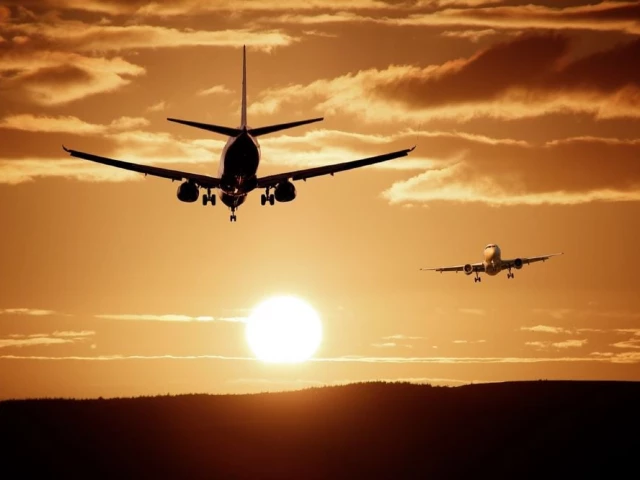
ISLAMABAD: Pakistan has reportedly prohibited Taiwanese airlines from using its airspace, citing its longstanding commitment to Beijing’s One-China policy, in a move that introduces a new aviation dimension to Islamabad’s diplomatic relationship with China.
According to a Bloomberg report published on Wednesday, October 28, Pakistan has become the first country to introduce such restrictions specifically against Taiwanese carriers on the grounds of the One-China policy.
The report quoted Defence Minister Khawaja Asif as saying that Pakistan’s aviation authorities follow the One-China policy and permit airlines from mainland China, rather than Taiwan, to operate through Pakistani airspace.
The reported decision marks a significant distinction between Pakistan’s diplomatic recognition of the People’s Republic of China and the operational arrangements governing international commercial aviation.
Taiwanese Airlines Begin Rerouting Flights
Flight-tracking information cited by Bloomberg indicated that Taiwan’s China Airlines and EVA Airways had stopped operating flights through Pakistani airspace from Sunday, October 25.
The carriers reportedly began changing their routes over the weekend following the introduction of the restrictions.
Neither airline provided comments to Bloomberg, while Taiwan’s Civil Aviation Administration did not directly address the reported changes in flight routes.
The available information does not establish how many flights have been affected, the additional distances involved or the financial consequences for the airlines.
However, changes to established international flight paths can create operational challenges for carriers, particularly when alternative routes require additional flying time, fuel consumption or adjustments to scheduling.
The reported restrictions therefore have implications extending beyond diplomatic symbolism, potentially affecting the commercial and logistical arrangements of international aviation.
Pakistan Restores Overflight Permission Following Initial Reports of Restrictions
A significant development emerged later on October 28, changing the status of the reported restrictions.
Documents issued by the Pakistan Civil Aviation Authority authorised China Airlines and EVA Airways to operate passenger and cargo flights through Pakistani airspace from October 28, 2026, until March 27, 2027.
The approvals were reported by Dawn and the Associated Press, while Bloomberg subsequently reported that the airlines’ overflight rights had been restored. Dawn+1
The documents did not explain whether the authorisations formally reversed an earlier prohibition or clarified an existing administrative arrangement. There was also no immediate explanation from Defence Minister Khawaja Asif regarding the apparent change in policy.
Consequently, it would be inaccurate to describe Pakistan’s airspace as remaining closed to Taiwanese airlines.
Pakistan’s One-China Policy and Bilateral Relations
Pakistan has maintained diplomatic relations with Beijing since 1951 and consistently recognises the People’s Republic of China as the government representing China.
Beijing regards Taiwan as part of its territory, while Taiwan maintains its own elected government and operates separately from mainland China. The two sides have been governed separately since 1949.
Pakistan’s diplomatic position has been an established component of its relationship with Beijing, but the latest episode demonstrates that diplomatic recognition and commercial aviation permissions are distinct policy matters.
Indeed, the initial restrictions were particularly notable because mainland China itself permits Taiwanese airlines to use its airspace. AA News+1
Pakistan and China have strengthened their economic relationship through the China-Pakistan Economic Corridor, a major component of Beijing’s Belt and Road Initiative.
The two countries also maintain extensive defence cooperation, with China serving as Pakistan’s principal supplier of military equipment.
Their relationship extends into trade, infrastructure, technology and regional diplomacy.
Nevertheless, the reported airspace restrictions and subsequent permissions illustrate how foreign-policy commitments can intersect with the practical requirements of international transportation.
Aviation Policy and Diplomatic Coordination
International aviation depends on predictable regulatory decisions, clearly communicated permissions and coordination between national authorities and commercial operators.
Abrupt changes in overflight arrangements can disrupt established routes and complicate operational planning, particularly for airlines serving long-distance markets.
The latest episode also illustrates the importance of distinguishing a government’s diplomatic position from the specific administrative rules governing commercial activity.
Pakistan’s commitment to the One-China policy remains unchanged. Its decision to authorise Taiwanese carriers to use Pakistani airspace, however, demonstrates that this diplomatic position does not necessarily require the exclusion of those airlines from international flight routes.
For aviation operators, the immediate development is the restoration of permission to use Pakistani airspace through March 27, 2027.
For policymakers, the episode highlights the importance of regulatory clarity, institutional coordination and timely public communication when decisions affecting international connectivity intersect with sensitive diplomatic relationships.